The Watchers team and our contributors bring the latest on extreme weather, earthquakes, volcanic eruptions, space weather, and all things science. We're all about making sense of the natural world and keeping you informed on what’s happening. Got a tip or a question? Hit us up using the form at newstips!

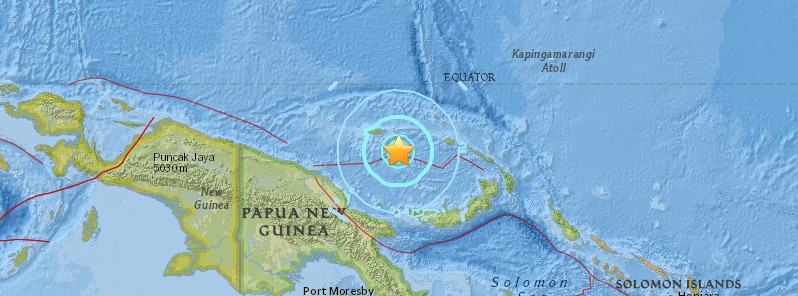
  • Shallow M6.4 earthquake hits near Manus Island, Papua New Guinea

    A strong and shallow M6.4 earthquake (USGS) was registered near Manus Island, Bismarck Sea, Papua New Guinea at 19:38 UTC on July 25, 2016. The agency is reporting a depth of 7.3 km (4.5 miles). Geoscience Australia is reporting Mwp6.5 at a depth of 0 km. According…

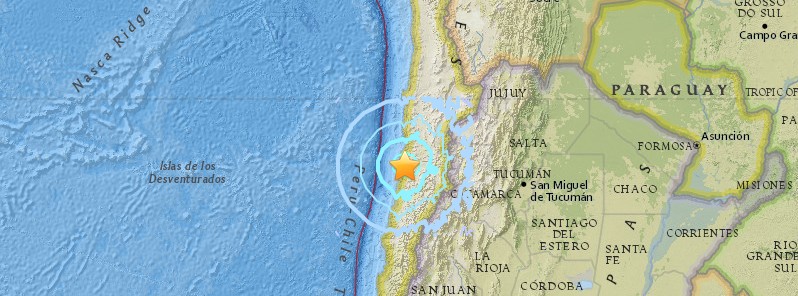
  • M6.1 earthquake at intermediate depth hits Atacama, Chile

    A strong earthquake registered by the USGS as M6.1 hit Atacama, Chile at 17:26 UTC on July 25, 2016. The agency is reporting a depth of 71.6 km (44.5 miles). CSN Chile is reporting Mw6.1 at a depth of 77.7 km (48.3 miles). According to the USGS, the epicenter was…

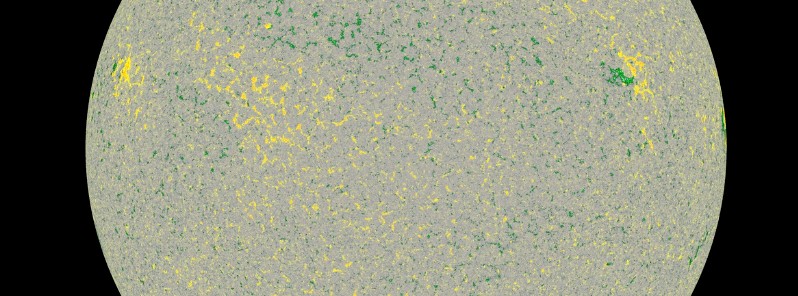
  • Spotless Sun heralds Solar Minimum after CME producing Region 2567 departs

    After Active Region 2567, the source of 7 M-class and numerous C-class solar flares between July 21 and 24, rotated away from the visible disk, our Earth facing Sun is again spotless. This is the third 'spotless Sun' since June 3, and although it is a…

  • Sand Fire: Major California wildfire explodes over the weekend

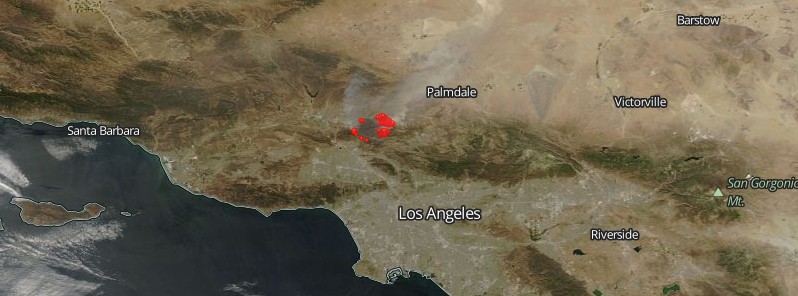
    A wildfire that started on July 22 in the mountains of the Santa Clarita Valley, Angeles National Forest, north of Los Angeles, California has exploded over the weekend, scorching more than 13 300 hectares (33 000 acres) by early morning UTC on July 25, 2016….

  • 3 strong M-class solar flares erupt from Region 2567, CME produced

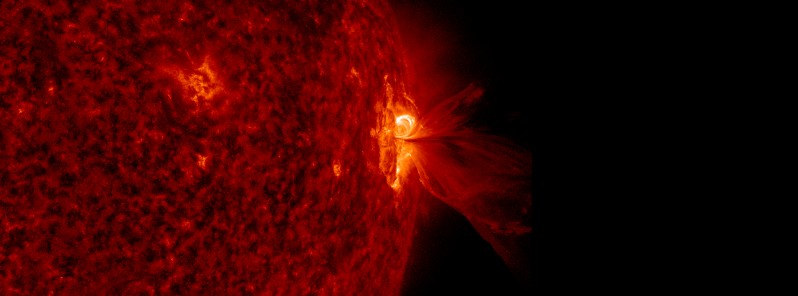
    Three strong solar flares erupted from Active Region 2567 early on July 23, 2016 – M5.0, M7.6, and M5.5. A Coronal Mass Ejection (CME) was produced during the third one, however, this region is not in a position to produce Earth-directed CMEs. The first flare…

  • A full year of life on Earth as seen 1.6 million km away

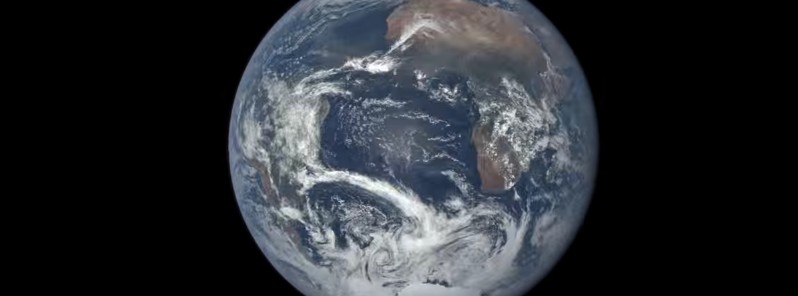
    On July 20, 2015, NASA released to the world the first image of the sunlit side of Earth captured by EPIC camera on NOAA's DSCOVR satellite. The camera has now recorded a full year of life on Earth from its orbit at Lagrange point 1, approximately 1.6 million km…