Teo Blašković founded The Watchers in 2011 and edited it until 2026, covering seismic and volcanic activity, extreme weather, space weather and near-Earth objects. Articles on this page are his archive.

  • Departing Region 2257 erupts with moderate M2.2 solar flare

    A moderate solar flare measuring M2.2 at its peak time erupted from a departing Region 2257 ('beta-gamma') on January 14, 2015. The event started at 12:30, peaked at 12:58 and ended at 13:08 UTC.This region was responsible for two M-class solar flares yesterday
  • Strong M5.6 solar flare erupts from Region 2257

    A strong solar flare measuring M5.6 (R2 – Moderate radio blackout) erupted from Active Region 2257 at 04:24 UTC on January 13, 2015. The event started at 04:13 and ended at 04:38 UTC.A 10cm Radio Burst lasting 4 minutes, with peak flux of 290 sfu, was associated with th

  • New round of severe weather to hit southern Australia

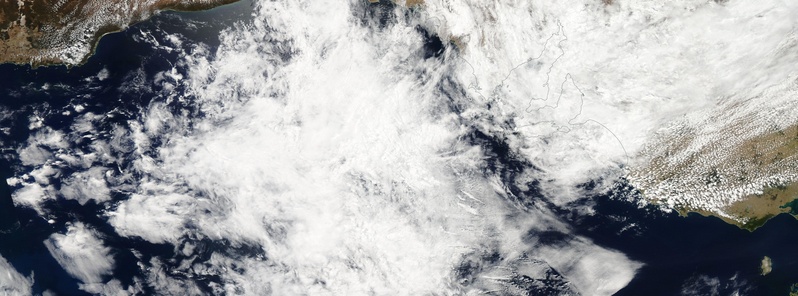
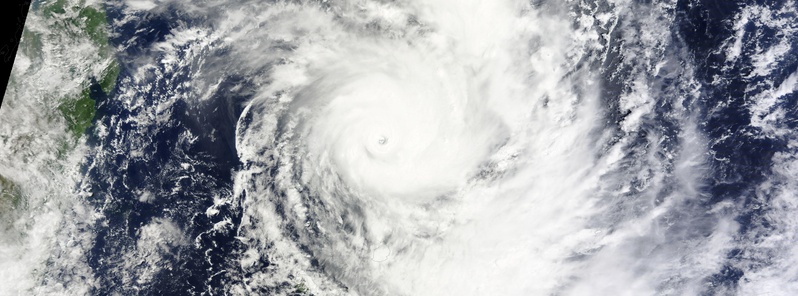
    Australian Bureau of Meteorology (BOM) has issued new severe weather warnings for parts of southern Australia today, January 12, 2015. After a week of severe bushfires, South Australia has been hit particularly hard by heavy rain which started affecting the country on T

  • Kliuchevskoi aviation color code raised to Orange, Russia

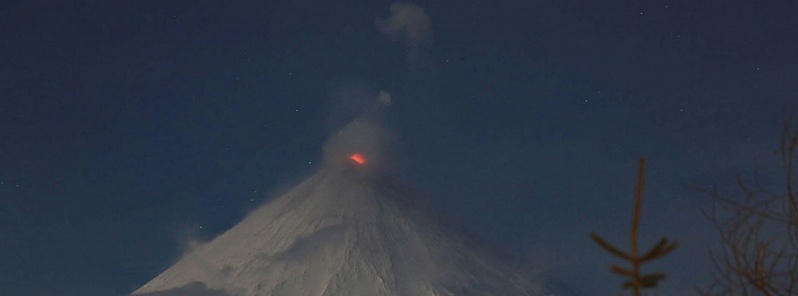
    Explosive eruption of Russian Kliuchevskoi volcano began on January 1, 2015 and continues, KVERT reported today and raised Aviation Color Code to Orange.Explosions send ash up to 5 – 6 km a.s.l., sometimes up to 7 km a.s.l. According to video and satellite data, a lava

  • Large eruption at Shiveluch, volcanic ash up to 9.1 km, Russia

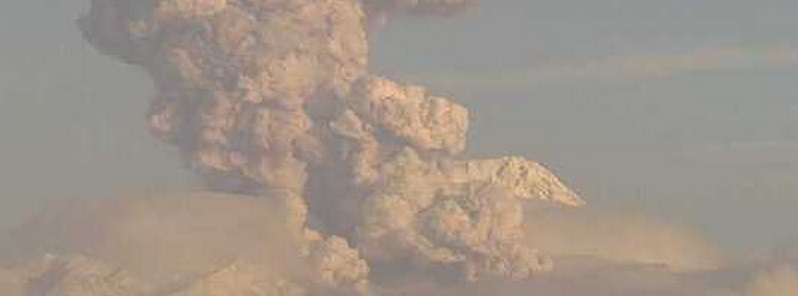
    A very large explosive event occurred at Russian Shiveluch volcano (Kamchatka) at 00:39 UTC on January 7, 2015. Tokyo VAAC reported volcanic ash at 02:15 UTC rose to an altitude of approximately 9.1 km.KVERT said pyroclastic flow was observed at the SE flank of the

  • Comet Lovejoy (C/2014 Q2) makes closest approach to Earth

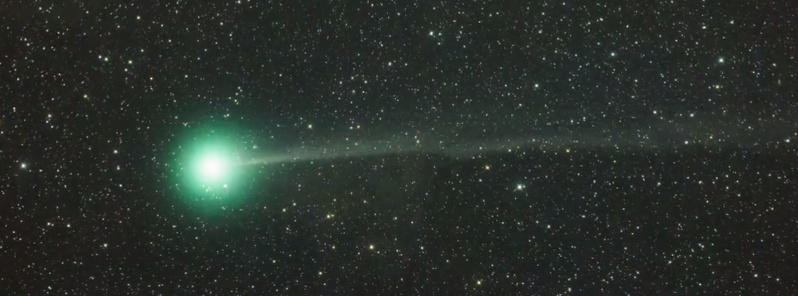
    Comet C/2014 Q2 (Lovejoy), a long-period comet discovered by Australian astronomer Terry Lovejoy on August 17, 2014, is making closest approach to our planet today, at some 70 million kilometers (43.5 million miles / 0.469 AU) away.This comet is now a naked eye object a