Asteroid 2025 WV13 flew past Earth at just 0.06 lunar distances
A newly discovered asteroid designated 2025 WV13 made a very close approach to Earth on November 27, 2025, passing at just 0.065 lunar distances.
I'm a dedicated researcher, journalist, and editor at The Watchers. With over 20 years of experience in the media industry, I specialize in hard science news, focusing on extreme weather, seismic and volcanic activity, space weather, and astronomy, including near-Earth objects and planetary defense strategies. You can reach me at teo /at/ watchers.news.

A newly discovered asteroid designated 2025 WV13 made a very close approach to Earth on November 27, 2025, passing at just 0.065 lunar distances.

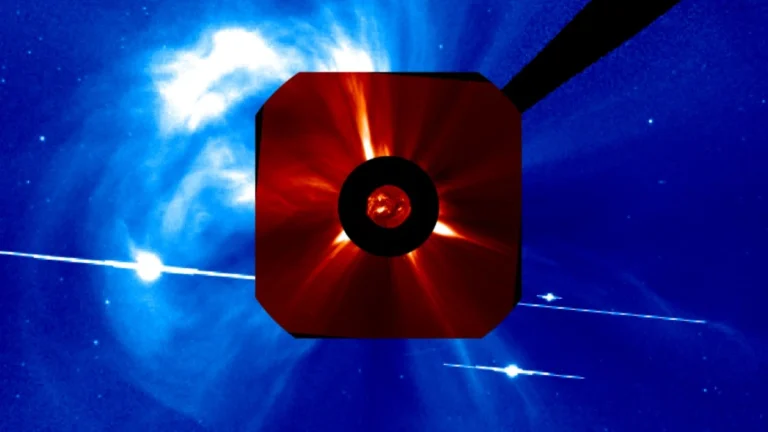
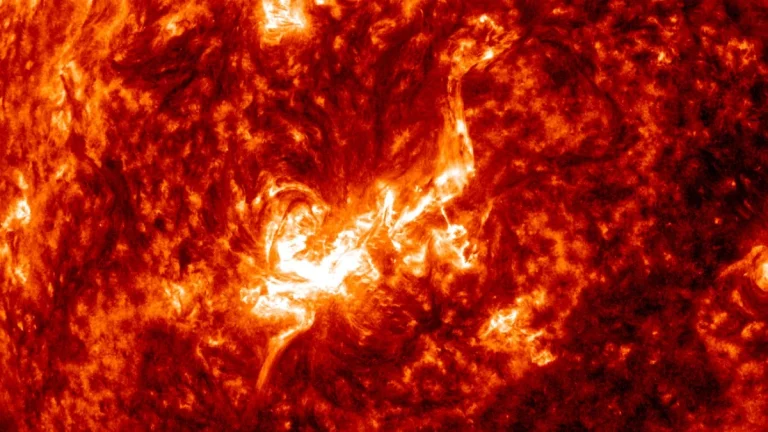
A major solar flare registered as X1.9 erupted from Active Region 4299 at 02:49 UTC on December 1, 2025. The event started at 02:27 and ended at 03:05 UTC. This region is currently making its second run through the Earth-side of the Sun, after producing multiple X-class flares in early November.

A large chain-reaction crash involving about 45 vehicles occurred on Interstate 70 westbound near Terre Haute, Indiana, at around 10:00 LT on November 29, 2025, amid heavy snowfall and reduced visibility. The collision blocked all westbound lanes for nearly 6 hours, but authorities reported no fatalities or major injuries. The event happened as a winter storm system brought snow and freezing rain across parts of Illinois and Indiana, creating hazardous travel conditions.

A low-pressure area developed over the Strait of Malacca on November 22, 2025, and gradually organized into Cyclonic Storm Senyar on November 26. The rare low-latitude system made landfalls in northern Sumatra and Peninsular Malaysia, producing extreme rainfall and catastrophic flooding across Indonesia, Malaysia, and southern Thailand. At least 316 people were killed and thousands displaced before Senyar weakened into a low-pressure remnant on November 28.

A strong earthquake registered by the USGS as M6.0 struck southern Alaska at 17:11 UTC on November 27, 2025. The agency is reporting a depth of 69.4 km (43.1 miles). EMSC is reporting M6.0 at a depth of 83 km (51.5 miles). According to the National Tsunami Warning Center (NTWC), a tsunami is not expected.

A major landslide caused by days of heavy rain hit Afaahiti-Taravao in southeast Tahiti at around 05:00 LT on November 26, 2025, burying several homes, and leaving at least 7 people dead and several missing, including one child.

A strong and shallow earthquake registered by the USGS as M6.6 struck near Sinabang, Indonesia, at 04:56 UTC on November 27, 2025. The agency is reporting a depth of 25.4 km (15.8 miles). EMSC is reporting the same magnitude and depth. According to the Indian Ocean Tsunami Warning and Mitigation System (IOTWMS), there is a potential tsunami threat to countries bordering the Indian Ocean.

A powerful hailstorm hit Erechim, Rio Grande do Sul, Brazil, on November 23, 2025, producing hailstones up to 10 cm (3.9 inches) in diameter and injuring over 150 people. Authorities declared a state of emergency after damage extended across hundreds of homes and dozens of schools.

A powerful explosive eruption took place at Bezymianny volcano in Kamchatka, Russia, on November 26, 2025, with ash reaching 11.4 km (37 400 feet) a.s.l., as of 04:00 UTC. The Aviation Color Code was raised to Red due to ongoing explosions that could affect regional and international flights.

Episode 37 of the ongoing Kīlauea eruption began at 14:30 HST on November 25, 2025 (00:30 UTC, November 26), producing sustained lava fountains about 120 m (400 feet) high from the north vent inside Halemaʻumaʻu crater. The eruption remains confined within Hawaiʻi Volcanoes National Park, with no impacts beyond the summit area. Seismic tremor intensified at the onset, and sulfur dioxide (SO2) emissions rose to around 50 000 tonnes per day, generating volcanic gas plumes and vog drifting southwest under light northeast winds.