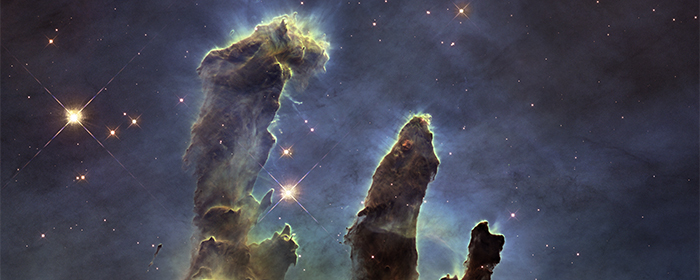
• Hubble captures the Pillars of Creation twenty years on

    The NASA/ESA Hubble Space Telescope has captured many breathtaking images of the Universe, but one snapshot stands out from the rest: the Eagle Nebula’s Pillars of Creation.In 1995 Hubble’s iconic image revealed never-before-seen details in the giant columns
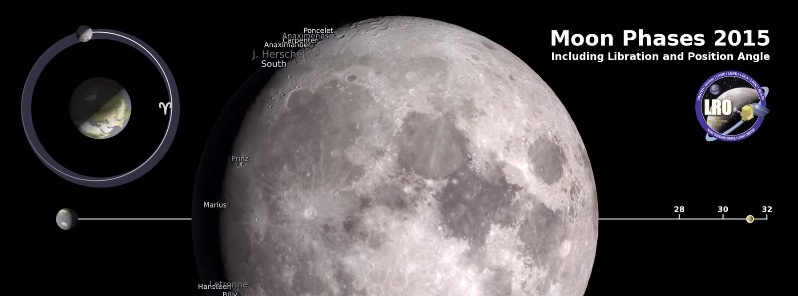

  • Moon’s phases and libration at hourly intervals throughout 2015

    These visualizations show the Moon's phases and libration at hourly intervals throughout 2015, as viewed from both northern and southern hemispheres. Each frame represents one hour. In addition, the visualizations show the Moon's orbit position, sub-Earth and su

  • Kliuchevskoi aviation color code raised to Orange, Russia

    Explosive eruption of Russian Kliuchevskoi volcano began on January 1, 2015 and continues, KVERT reported today and raised Aviation Color Code to Orange.Explosions send ash up to 5 – 6 km a.s.l., sometimes up to 7 km a.s.l. According to video and satellite data, a lava

  • Mercury from gold mines accumulates hundreds of miles downstream

    Duke University researchers have found hazardous levels of mercury hundreds of miles downstream from Peruvian gold mines. Researchers have determined that the health risks taken on by artisanal, small-scale gold miners extend far beyond the miners themselves. Based…

  • NASA observatories take an unprecedented look into superstar Eta Carinae

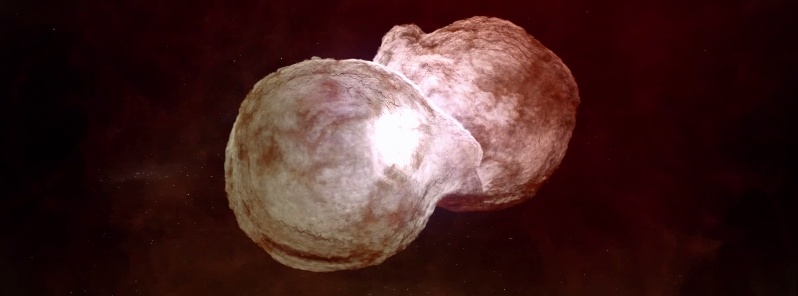
    Eta Carinae, the most luminous and massive stellar system within 10 000 light-years of Earth, is known for its surprising behavior, erupting twice in the 19th century for reasons scientists still don't understand.A long-term study led by astronomers at NASA's Go

  • Extremely bright fireball recorded over Bucharest, Romania

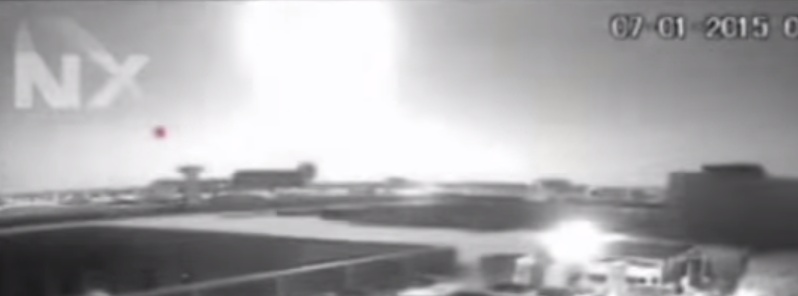
    A bright light followed by a loud noise was recorded over Romanian sky at 01:05 UTC on January 7, 2015 (03:05 local time). The event was observed mainly in the southeastern area of the country and recorded by surveillance cameras in several cities.Based on the data corr

  • Huge new astronomy database now available to the public

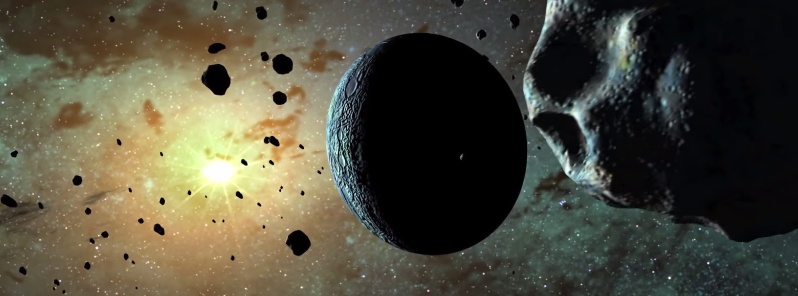
    Penn State University astronomers are among the scientists of the Sloan Digital Sky Survey (SDSS) who this week are releasing to the public a massive collection of new information about the universe. "This set of observations is one of the largest astronomical data