Heavy rains trigger major flash floods across Oman
Heavy rainfall caused major flash floods across Oman on Sunday, April 14, 2024, leading to at least 12 fatalities and 5 people missing.


Heavy rainfall caused major flash floods across Oman on Sunday, April 14, 2024, leading to at least 12 fatalities and 5 people missing.

A deadly severe weather outbreak hit the Gulf Coast and lower Mississippi Valley on April 10, 2024, with tornadoes, heavy rains, and high wind gusts. The storms caused at least one fatality in Mississippi and widespread destruction, including in New Orleans, which faced a Flash Flood Emergency. Investigations suggest the event might qualify as a serial derecho — a significant meteorological phenomenon.

Severe flooding struck Russia’s Ural Mountains and Siberia, alongside parts of neighboring Kazakhstan since April 3, 2024, caused by rapid snow melt and heavy rainfall. The situation worsened after two dams broke near Orsk City on April 5, leading to record flood levels by April 7. The crisis has resulted in at least three deaths in Russia and more than 10 500 homes flooded. In Kazakhstan, two fatalities and nearly 75 000 displacements have been reported.

The third large wave of Saharan dust in just two weeks is moving over Europe, significantly increasing PM10 concentrations at ground level for the Iberian Peninsula, and some parts of France and Germany.

A rare earthquake registered by the USGS as M4.8 hit New Jersey, U.S. at 14:23 UTC (10:23 LT) on April 5, 2024, at a depth of 4.7 km (2.9 miles). This earthquake — now known as the 2024 Whitehouse Station, New Jersey Earthquake — is the strongest to hit New Jersey since 1783.

A strong and shallow earthquake registered by the USGS as M7.4 hit eastern Taiwan at 23:58 UTC on April 2, 2024 (07:58 LT, April 3). The agency is reporting a depth of 34.8 km (21.6 miles). EMSC is reporting M7.4 at a depth of 20 km (12.4 miles). This is the strongest quake to hit Taiwan since 1999 Jiji earthquake.

Intense rainfall and hailstorms struck western Cuba on March 22, 2024, causing widespread damage, including downed trees, power outages, and flash floods. The National Electricity Union reported over 260 000 users without electricity in provinces such as Pinar del Rio, Artemisa, Mayabeque, Matanzas, and Havana.
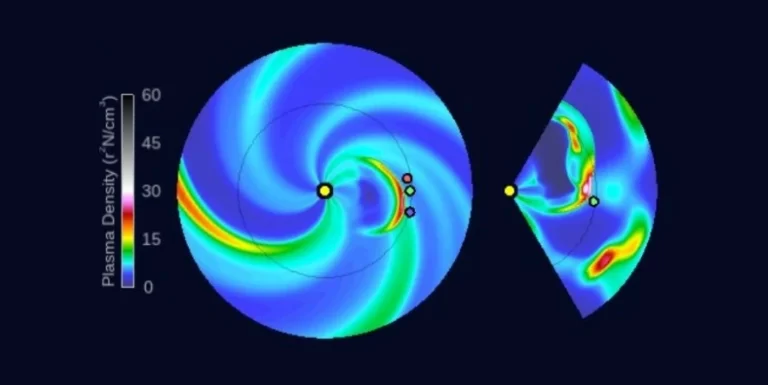
Coronal mass ejection (CME) produced by the X1.1 solar flare at 01:33 UTC on March 23, 2024, is expected to impact Earth late March 24 or early March 25, producing G2 – Moderate to G3 – Strong geomagnetic storming.

Heavy rains in Brazil’s Rio de Janeiro state on March 22, 2024, resulted in at least nine fatalities, with Petropolis being the hardest hit. A staggering 270 mm (11 inches) of rain fell within 24 hours, significantly impacting the region and leading to numerous incidents, including landslides and house collapses. The storm then moved to the neighboring state of Espírito Santo, dropping more than 200 mm (7.8 inches) of rainfall within 24 hours.
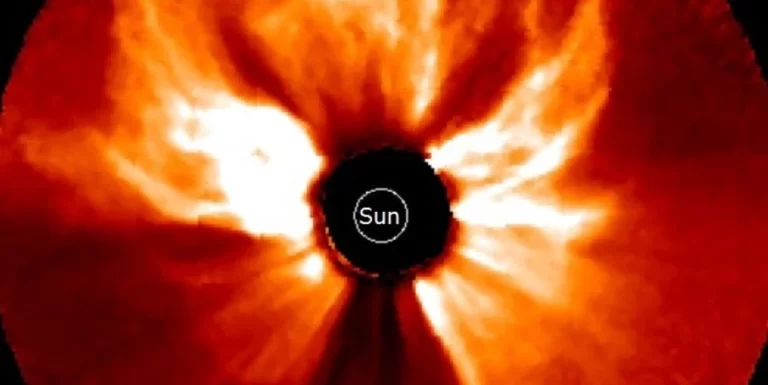
A major, long-duration solar flare measuring X1.1 erupted from Active Region 3614 at 01:33 UTC on March 23, 2024. The event started at 00:58 and ended at 02:21 UTC. A halo CME was produced, with impacts to Earth likely late March 25 or early March 26.
