• Asteroid 2026 SZ2 passed Earth at just 0.05 lunar distances

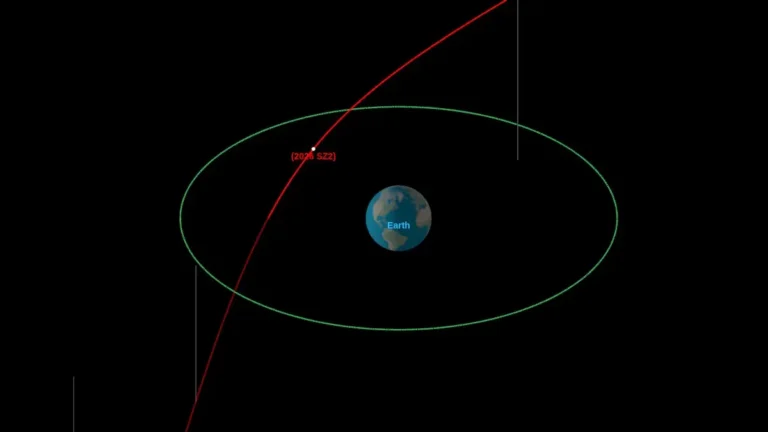
    Asteroid 2026 SZ2 passed Earth at 0.055 lunar distances (about 0.000141 AU / 21 100 km / 13 100 miles) from the center of our planet at 21:19 UTC on September 20, 2026. Its closest point was approximately 14 800 km (9 200 miles) above Earth’s surface, placing the asteroid well inside the orbit of geostationary satellites.
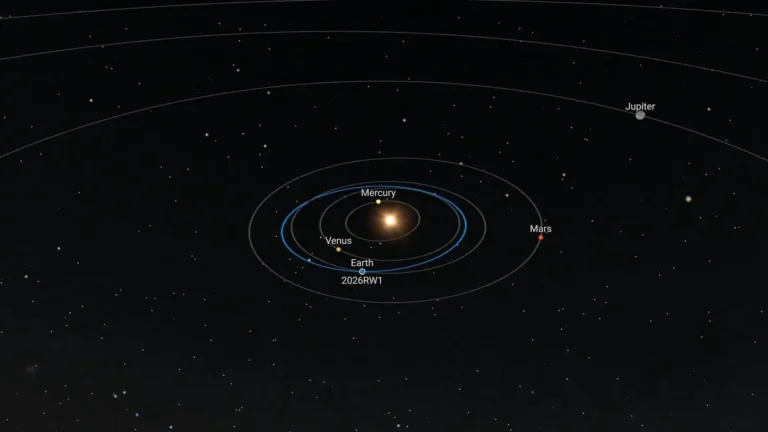
  • Asteroid 2026 RW1 impacts Earth over Indian Ocean about 7 hours after discovery, becomes 13th known asteroid detected before impact

    Asteroid 2026 RW1 — the 13th predicted Earth impactor — entered Earth’s atmosphere over the Indian Ocean northwest of Australia at 16:07 UTC on September 6, 2026, about 7 hours and 22 minutes after its initial reported observation by the University of Arizona Mt. Lemmon Survey. The European Space Agency (ESA) estimated the object at 0.6–1.3 m (2.0–4.3 feet).

  • Asteroid 2026 PC6 passed Earth at 0.05 LD, marking closest flyby of 2026

    Asteroid 2026 PC6 passed Earth at 0.053 lunar distances (0.00014 AU / about 20 400 km / 12 700 miles) from the center of our planet at 00:50 UTC on August 12, 2026, according to the National Aeronautics and Space Administration’s Center for Near-Earth Object Studies (NASA/CNEOS). At the nominal distance, the object passed about 14 000 km (8 700 miles) above Earth’s surface, placing it inside the orbit of geostationary satellites and making it the closest asteroid flyby of the year.

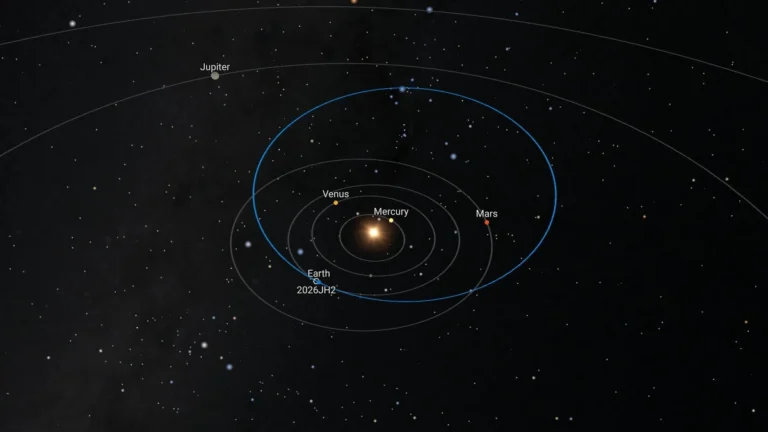
  • Asteroid 2026 JH2 to fly past Earth at 0.24 lunar distances

    Asteroid 2026 JH2 is expected to pass Earth at a distance of 0.237 LD (0.00061 AU / 91 300 km / 56 700 miles) from the center of our planet at 21:23 UTC on May 18, 2026. Its closest point will be about 84 900 km (52 700 miles) above Earth’s surface.

  • Asteroid 2026 JM2 passed Earth at 0.1 lunar distance

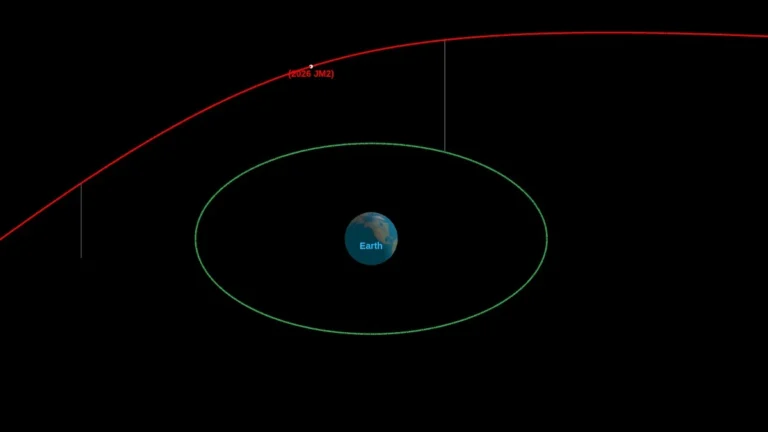
    Asteroid 2026 JM2 passed Earth at a distance of 0.114 LD (0.00029 AU / 43 800 km / 27 200 miles), from the center of our planet at 13:06 UTC on May 7, 2026, becoming the 4th closest known asteroid flyby within 1 lunar distance recorded so far this year. At its closest, the object was about 37 400 km (23 200 miles) above Earth’s surface, about 1 600 km (1 000 miles) outside the altitude used by geostationary satellites.

  • Asteroid 2026 HZ4 passed Earth at 0.072 lunar distances, the second closest of the year

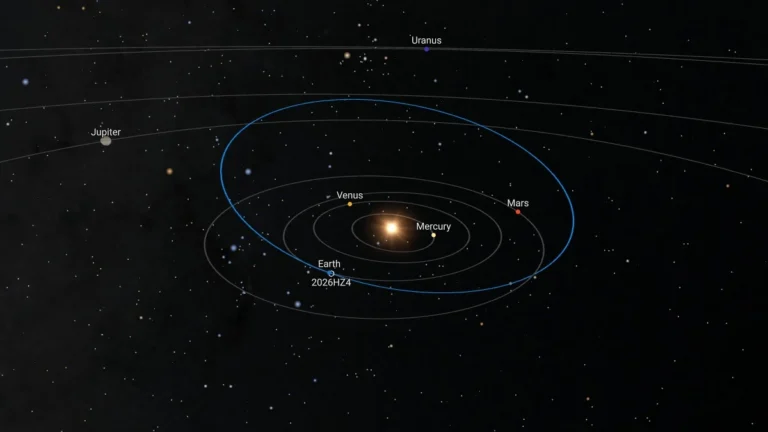
    Asteroid 2026 HZ4 passed Earth at a distance of 0.077 LD (0.00020 AU / 29 709 km / 18 460 miles) from the center of our planet at 12:13 UTC on April 24, 2026, becoming the second-closest known asteroid flyby within 1 lunar distance recorded so far this year. Its closest point was about 23 338 km (14 501 miles) above Earth’s surface, placing it inside the orbit of geostationary satellites.
  • Asteroid 2025 WE14 flew past Earth at 0.07 LD

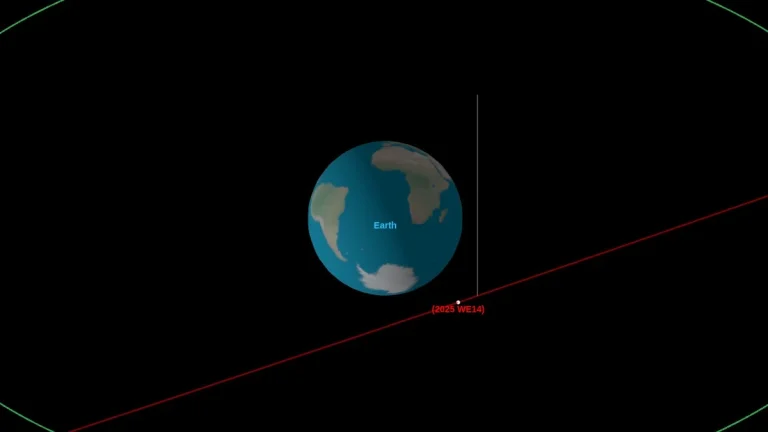
    A newly discovered asteroid designated 2025 WE14 flew past Earth at a distance of 0.073 lunar distances at 18:44 UTC on November 29, 2025. The object was first detected by the Mt. Lemmon Survey on November 30 during a very short one-day observation arc.

  • Asteroid 2025 FA22 enters top 5 ESA’s impact risk list

    A newly discovered asteroid, 2025 FA22, has climbed into the top five positions of the European Space Agency’s (ESA) risk list due to its low but measurable chance of striking Earth in 2089. During the first four months of 2025, more than 1 000 new NEOs have been discovered, in line with the recent average of about 3 000 per year.