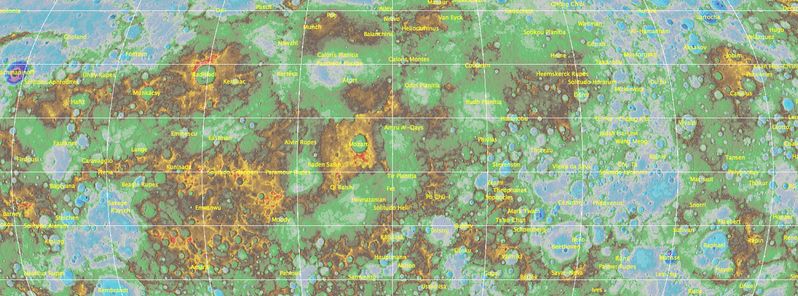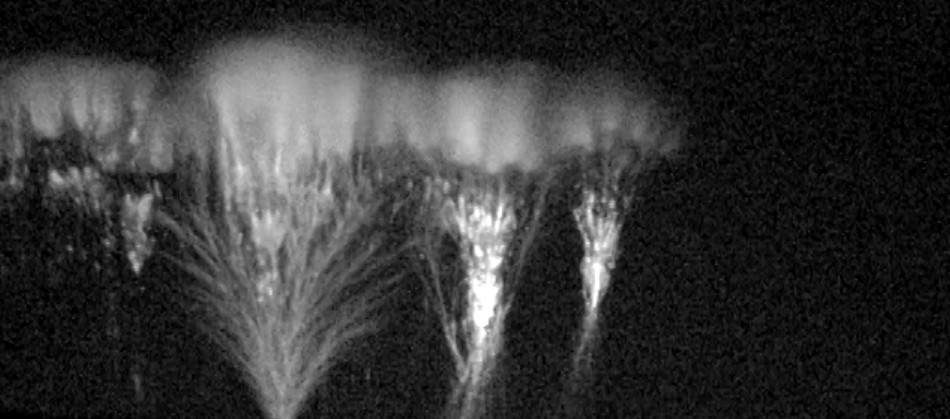
• Rare form of transient luminous event over Oklahoma, US

    An enormous swarm of sprites was observed across the top of a thunderstorm during a severe weather outbreak in Oklahoma, US on May 23, 2016. The phenomenon was recorded by amateur astronomer Thomas Ashcraft, almost 640 km (400 miles) away, SpaceWeather.com reports,…

  • 200-meter-long sinkhole opens in Florence and swallows 20 cars, Italy

    A 200-meter-long (650 feet) and 7-meter-wide (23 feet) sinkhole opened up along the Arno River in the center of Florence, Italy around 06:15 (local time) on May 25, 2016, swallowing 20 parked cars. Emergency services cordoned off the area and asked the residents to…

  • Large sinkhole swallows four cars in downtown Ruijin, southeast China

    A large sinkhole opened in a major avenue crossing in downtown Ruijin, southeast China’s Jiangxi Province on May 22, 2016, swallowing four cars and a tree. The hole is 3 meters deep (9.8 feet) and 30 meters (98.4 feet) wide. Nobody was hurt, and an…

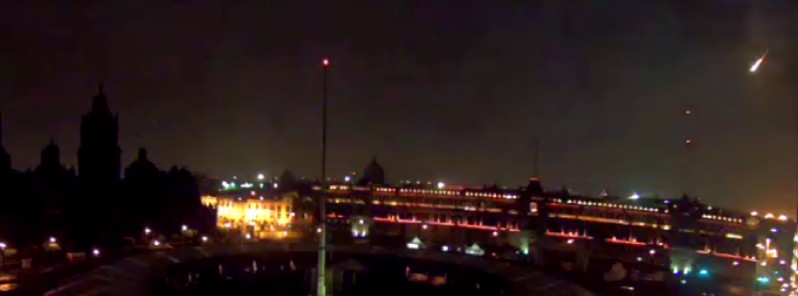
  • Bright fireball accompanied by sonic boom over central Mexico

    A bright fireball was observed and recorded over central Mexico at 06:47 UTC on May 21, 2016. The event was accompanied by a sonic boom as the meteor disintegrated in the atmosphere. Several witnesses from Mexico City, Puebla, and Tlaxcala said a green and white…

  • 100-meter-high walls of sand sweep across Kashgar, China

    Massive sandstorms have hit Tumxuk City and Minfeng County in northwest China’s Xinjiang Uygur Autonomous Region since Monday, May 16, 2016. With walls of packed sands falling over on people and buildings from as high as 100 meters (328 feet), visibility was…

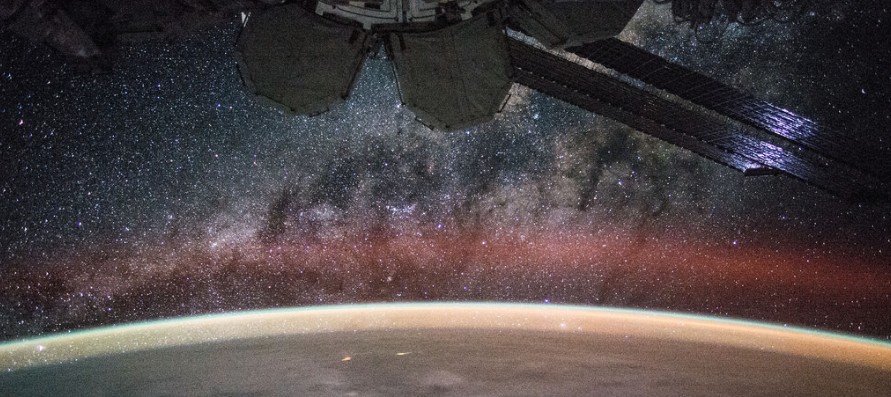
  • ISS makes 100 000 orbits around Earth

    As it passed Earth's equator at 06:10 UTC on May 16, 2016, the International Space Station (ISS) started its 100 000th orbit around Earth. It took 17 years for ISS to reach this important milestone. During the 100 000 orbits since the first component of the…

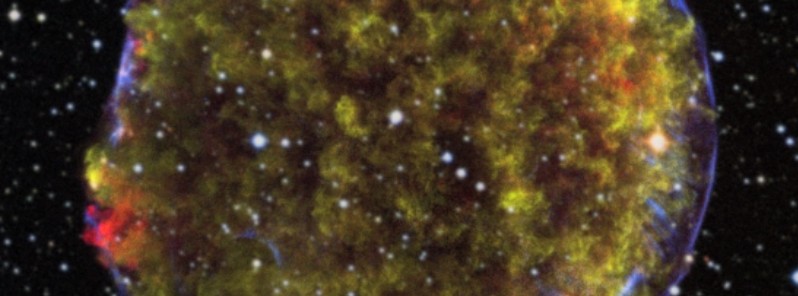
  • X-ray observatory captures expanding debris from a stellar explosion

    Using data from NASA's Chandra X-ray Observatory, the NSF’s Karl G. Jansky Very Large Array (VLA) and many other telescopes astronomers are observing the debris field from supernova explosion first extensively observed and written about by Danish…

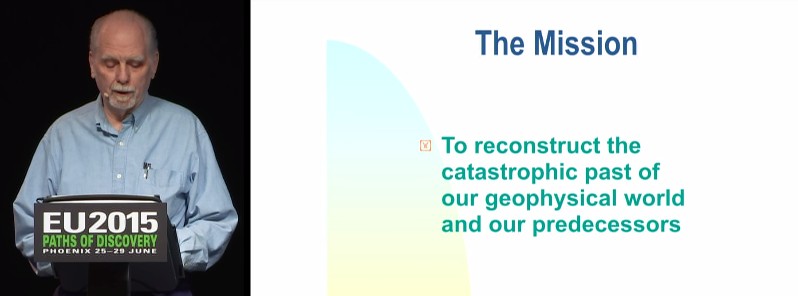
  • Michael Armstrong: The ‘culture shock’ of planetary catastrophe

    In this presentation, Michael Armstrong will review the broad spectrum of human and cultural effects that followed from solar system instability and episodic catastrophe. These effects include earth’s environment and ecology, physical changes in human biology,…

  • Mercury’s rich topography revealed for the first time

    A team of scientists from the US Geological Survey (USGS), the Arizona State University, Carnegie Institute of Washington, Johns Hopkins University Applied Physics Laboratory and NASA have produced a first comprehensive, high-resolution topographic map of…