Asteroid 2023 EN flew past Earth at 0.3 LD
A newly-discovered asteroid designated 2023 EN flew past Earth at a distance of 0.3 LD / 0.00091 (136 134 km / 84 589 miles) from the center of our planet at 11:25 UTC on March 9, 2023.

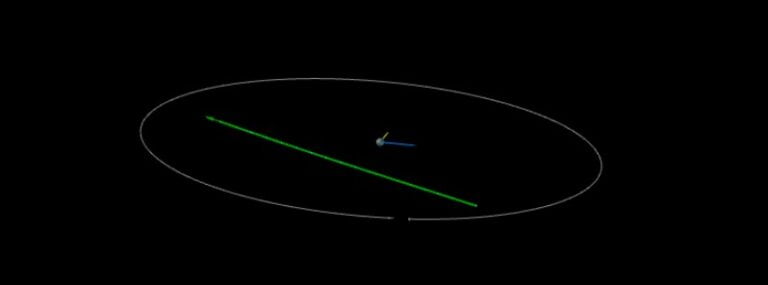
A newly-discovered asteroid designated 2023 EN flew past Earth at a distance of 0.3 LD / 0.00091 (136 134 km / 84 589 miles) from the center of our planet at 11:25 UTC on March 9, 2023.

A bright fireball was seen and recorded over Ontario, Canada at 03:06 UTC on March 7, 2023.
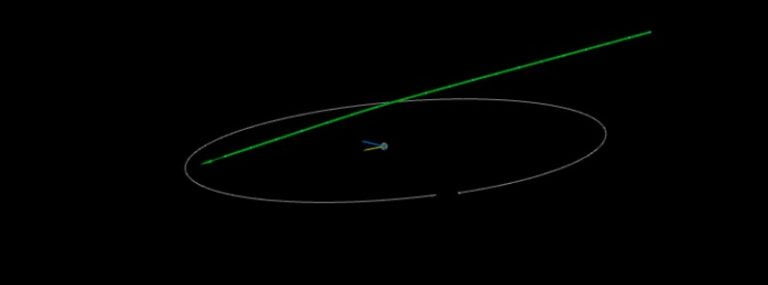
A newly-discovered asteroid designated 2023 DR flew past Earth at a distance of 0.2 LD / 0.00051 AU (76 294 km / 47 407 miles) at 05:47 UTC on February 25, 2023.

A long-lasting daylight fireball was recorded over southern California at 13:38 UTC (06:38 LT) on February 22, 2023.
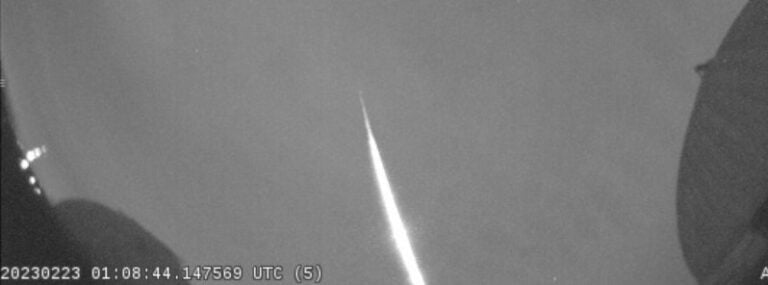
A bright fireball was seen and recorded just south of Pittsburgh, Pennsylvania at 01:08 UTC on February 23, 2023. The event lasted between 3 and 7 seconds before the object disintegrated.

A team of astronomers using the W. M. Keck Observatory in Hawaii has discovered that aurorae at visible lengths appear on all four of Jupiter’s major moons, namely Io, Europa, Ganymede, and Callisto. The discovery was made using the High-Resolution Echelle Spectrometer (HIRES) at the Keck Observatory, as well as other high-resolution spectrographs at the Large Binocular Telescope and Apache Point Observatory.

Authorities are investigating a possible meteorite impact in the city of Mission, south Texas, after numerous residents in the area reported an explosion that shook their homes on February 15, 2023. Our analysis points to a meteor exploding over south Texas, with some pieces surviving the atmospheric entry.

A newly-discovered asteroid designated 2023 CX1 impacted Earth over the English Channel between England and France, Europe at 02:59 UTC on February 13, 2023. This small asteroid was discovered just several hours before impact, making it the 7th asteroid to be discovered before impacting Earth.

A large fireball was seen and recorded over Krasnoyarsk, Siberia, Russia at 20:03 LT on January 31, 2023.
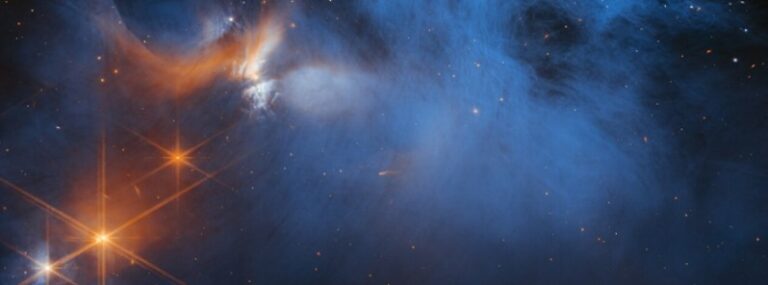
An international team of scientists have used the James Webb Space Telescope (JWST) to study ices in interstellar clouds, providing new insights into the chemical processes of one of the coldest, darkest places in the universe. The study, published in Nature Astronomy, found that these ices are formed from the earliest moments of the universe and contain biogenic elements that are important for life.
