• Galactic ‘hailstorm’ in the early Universe

    Astronomers have been able to peer back to the young Universe to determine how quasars – powered by supermassive black holes with the mass of a billion suns – form and shape the evolution of galaxies. Two teams of astronomers led by researchers at the

  • Swarm of scientific microprobes to the clouds of Jupiter in 2030

    A swarm of tiny probes each equipped with a different sensor could be fired into the clouds of Jupiter and grab data as they fall before burning up in the gas giant planet's atmosphere, according to a recently presented concept in International Journal of Space Scie

  • 67P – The violent birth of a comet

    The electric comet idea forces us to consult the astronomical testimony of our earlier forebears, where independent accounts, told with different words and different symbols in different parts of the world, convey a story of planetary catastrophe. Watch Update #1: The R

  • Slow-moving daylight fireball recorded over Houston, US

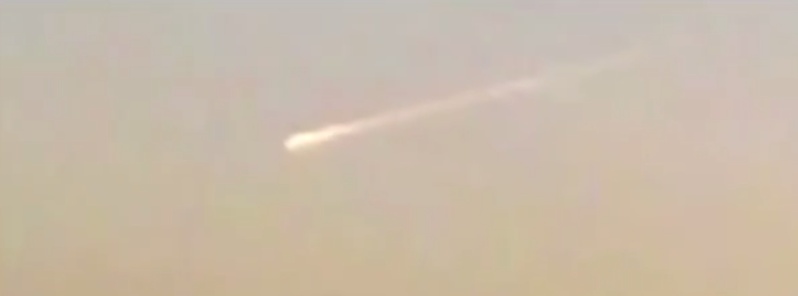
    A slow-moving daylight fireball was seen over Houston skies (Texas, US) late Sunday, January 18, 2015 and recorded by Jordan Sterling. The sighting raised a lot of questions after images and videos started appearing on social media, KHOU 11 News reports. Patricia Reiff,

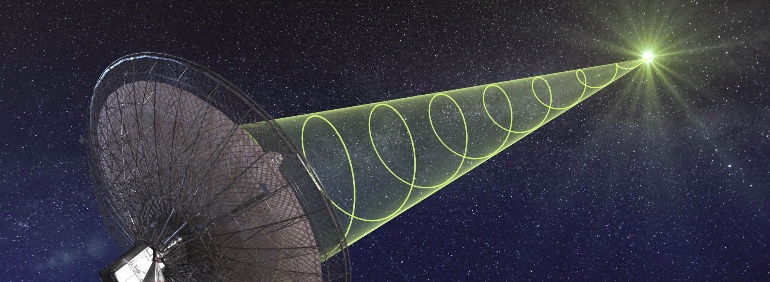
  • Fast radio burst from a distant source captured in real-time

    A short, sharp flash of radio waves from a mysterious source up to 5.5 billion light years from Earth has been detected in real-time by CSIRO’s Parkes radio telescope in eastern Australia. Swinburne University of Technology PhD student, Emily Petroff,

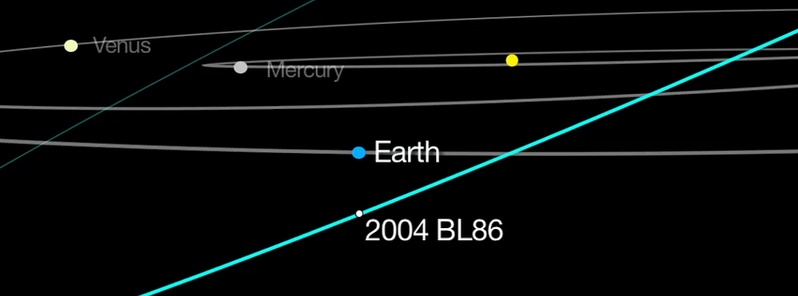
  • Asteroid 2004 BL86 to safely flyby Earth on January 26

    Asteroid 2004 BL86 will flyby our planet at a safe distance of approximately 1.2 million km (745 000 miles) at 16:20 UTC on January 26, 2015. This is about three times the distance of Earth to the Moon. Based on its reflected brightness, astronomers estimate that this a

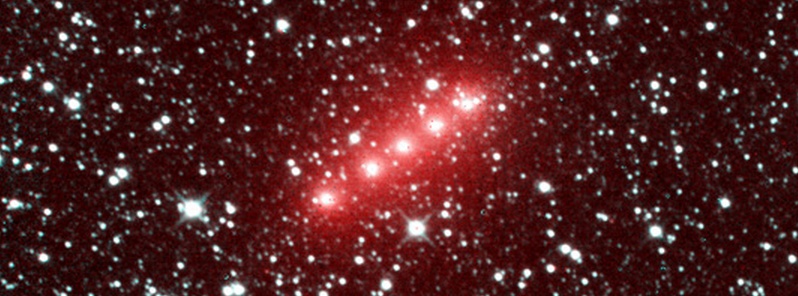
  • A yearlong look at asteroids and comets by NEOWISE

    NASA's Near-Earth Object Wide-field Survey Explorer or NEOWISE spacecraft, a space telescope that scans the skies for asteroids and comets, discovered and characterized 40 near-Earth objects (NEOs) in the first year after the mission was re-started in December

  • Hubble captures the Pillars of Creation twenty years on

    The NASA/ESA Hubble Space Telescope has captured many breathtaking images of the Universe, but one snapshot stands out from the rest: the Eagle Nebula’s Pillars of Creation.In 1995 Hubble’s iconic image revealed never-before-seen details in the giant columns

  • Moon’s phases and libration at hourly intervals throughout 2015

    These visualizations show the Moon's phases and libration at hourly intervals throughout 2015, as viewed from both northern and southern hemispheres. Each frame represents one hour. In addition, the visualizations show the Moon's orbit position, sub-Earth and su