Strong X1.1 solar flare erupts from AR 3615
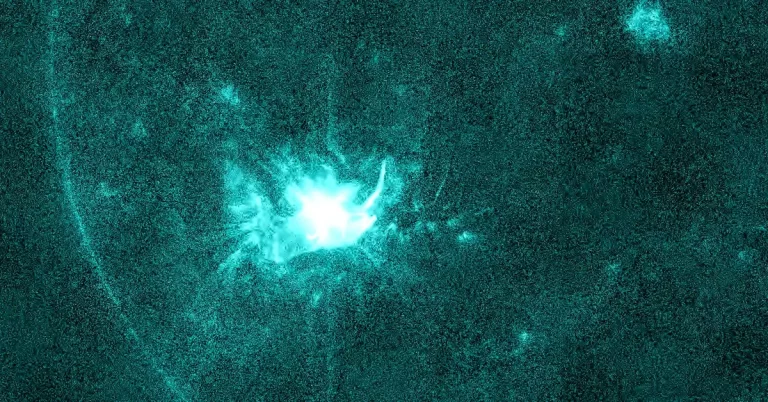
A strong X1.1 solar flare erupted from Active Region 3615 at 20:56 UTC on March 28, 2024. The event started at 20:50 and ended at 21:01 UTC.

A strong X1.1 solar flare erupted from Active Region 3615 at 20:56 UTC on March 28, 2024. The event started at 20:50 and ended at 21:01 UTC.

Launched in 2013, the European Space Agency’s (ESA) Swarm mission, consisting of three satellites, has provided a decade of invaluable data on Earth’s magnetic field and core dynamics. This data has enabled significant advances in understanding the mechanisms behind the magnetic field’s slow changes, as detailed in a recent ESA-funded project report.

Officials in Papua New Guinea are reporting at least 5 fatalities and approximately 1 000 homes destroyed following a shallow M6.9 earthquake at 20:22 UTC on March 23, 2024 (06:22 LT on March 24) in the East Sepik Province. The quake hit at a time when many parts of the country were dealing with severe flooding.

A major, long-duration solar flare measuring X1.1 erupted from Active Region 3614 at 01:33 UTC on March 23, 2024. The event started at 00:58 and ended at 02:21 UTC. A halo CME was produced, with impacts to Earth likely late March 25 or early March 26.

A strong and shallow earthquake registered by the BMKG as M6.5 hit Java Sea, Indonesia at 08:52 UTC (15:52 LT) on March 22, 024. The agency is reporting a depth of 10 km (6.2 miles). USGS and EMSC are reporting M6.4 at a depth of 8.5 km (4.3 miles).

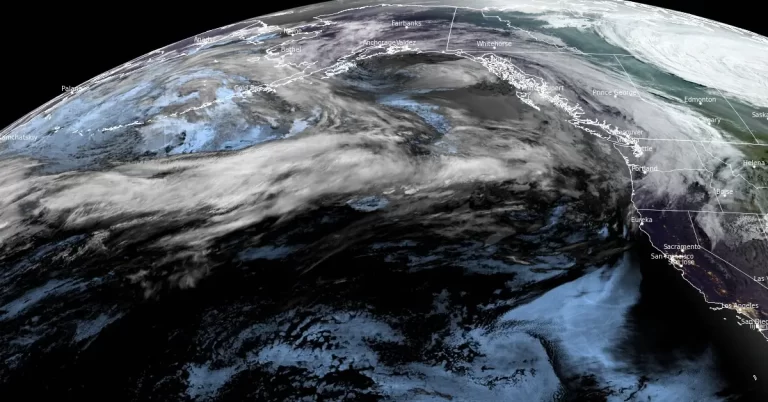
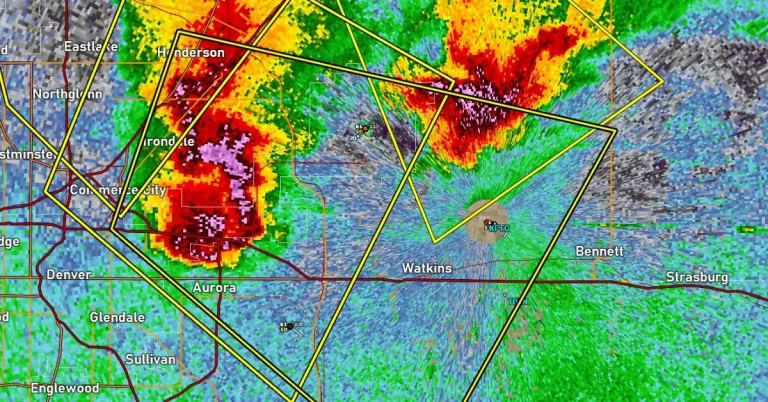
A series of potent weather systems will impact the United States over the coming days, causing a wide array of severe conditions from heavy snowfall across the northern states to thunderstorms and potential severe weather in the southern regions. Travel disruptions and severe weather warnings have been issued for affected areas.

Category 3 Tropical Cyclone “Megan” made landfall near Borroloola, the southwestern Gulf of Carpentaria coast, at approximately 06:00 UTC on March 18, 2024. At the time of the landfall, the system had a minimum pressure of 976.1 hPa and 1-minute sustained winds of 185 km/h (115 mph). Megan is the 5th named storm of the 2023/24 Australian region cyclone season.

A filament channel eruption, approximately 35 degrees in length, began at around 01:00 UTC on March 17, 2024, producing two coronal mass ejections (CMEs).

Tropical Cyclone “Megan” formed on March 16, 2024, in the Gulf of Carpentaria as the 5th named storm of the 2023/24 Australian region cyclone season. Megan has reached Category 3 intensity today and is forecast to cross the southwest coast of the Gulf of Carpentaria, most likely on Monday, March 18, with wind gusts up to 220 km/h (137 mph).

A moderately strong solar flare registered as M3.5 erupted from the southeast limb of the Sun at 16:35 UTC on March 16, 2024. The event started at 16:22 and ended at 16:44 UTC. This flare was partially eclipsed by the edge of the Sun, which means it was much stronger than M3.5.