Much-needed rains forecast for Southern California this weekend
Much-needed rains are forecast for Southern California this weekend as a low-pressure system impacts the state heavily affected by devastating wildfires.


I'm a dedicated researcher, journalist, and editor at The Watchers. With over 20 years of experience in the media industry, I specialize in hard science news, focusing on extreme weather, seismic and volcanic activity, space weather, and astronomy, including near-Earth objects and planetary defense strategies. You can reach me at teo /at/ watchers.news.
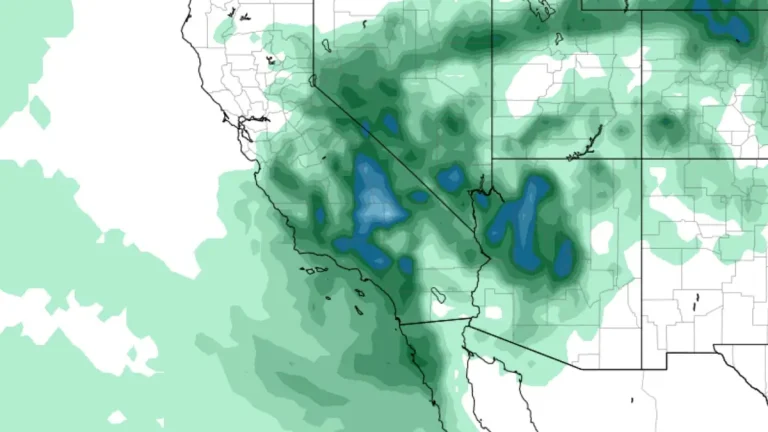
Much-needed rains are forecast for Southern California this weekend as a low-pressure system impacts the state heavily affected by devastating wildfires.
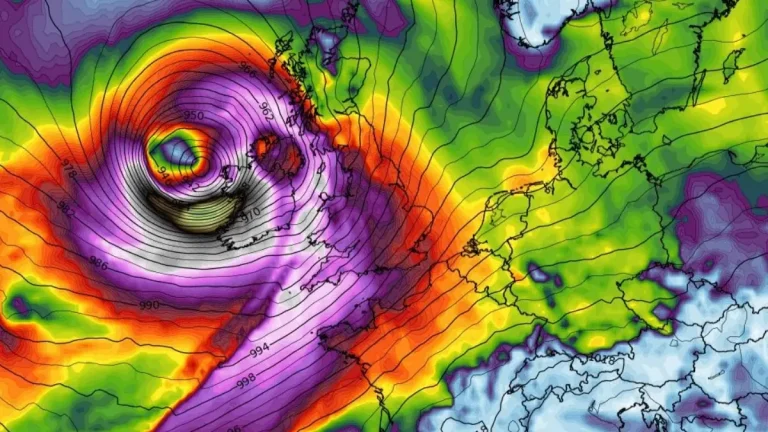
Met Éireann, Ireland’s national meteorological service, has issued Red Level wind warnings for multiple counties as Storm Éowyn approaches the country on January 23, 2025. Éowyn is forecast to produce destructive gusts exceeding 130 km/h (81 mph), potentially causing widespread power outages, structural damage, dangerous travel conditions, and coastal flooding. Authorities have urged the public to shelter in place under Red warnings and avoid non-essential travel under Orange warnings. Schools nationwide will close, and disruptions to public transport and essential services are anticipated.

A coronal mass ejection (CME) produced by the M3.3 solar flare at 10:39 UTC on January 21, 2025, is expected to deliver a glancing blow from late January 24 into January 25. This was a long-duration flare that started at 10:08 UTC and ended at 11:00.

A major winter storm brought heavy snowfall and strong winds to Escambia County, Florida, on January 21, 2025, leading to the closure of the Pensacola Bay Bridge and sections of Interstate 10 (I-10). Law enforcement officers were deployed to block access to bridges and assist vehicles struggling with hazardous road conditions.

A major winter storm swept through New Orleans on January 21, 2025, bringing officially recorded snowfall of 20 cm (8 inches), with some reports indicating accumulations of up to 30 cm (1 foot). The storm effectively shut down much of the city, disrupting transportation and daily activities.

A strong and shallow earthquake registered by Taiwan’s Central Weather Administration (CWA) as M6.4 hit southern Taiwan at 16:17 UTC on January 20, 2025 (00:17 LT, January 21). The agency is reporting a depth of 9.7 km (6 miles). The USGS is reporting M6.0 at a depth of 10 km (6.2 miles), EMSC M6.0 at a depth of 6 km (3.7 miles).
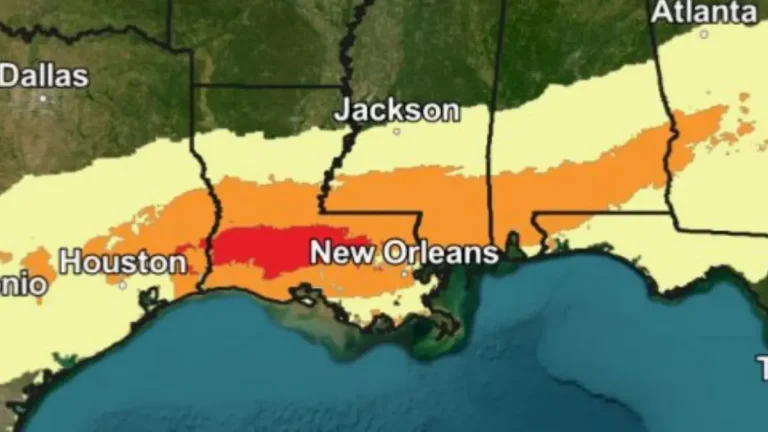
A bitterly cold arctic airmass has overspread the interior western, central, and eastern U.S. following a strong cold front passage over the weekend. In addition to the frigid temperatures, the combination of such cold air reaching the Gulf Coast and a developing low pressure system will lead to a rare, significant winter storm for the…

Southern California’s wildfire risk is reaching critical levels on Monday, January 20, 2025, with forecasters cautioning that dry vegetation and powerful winds could create the perfect conditions for fast-spreading, unpredictable fires. Potential impacts from this event include downed trees and power outages, very rapid and erratic fire spread, dangerous driving conditions and travel delays, especially for high-profile vehicles, and hazardous sea conditions with potential breaking waves for Avalon Harbor. If you live in affected region and haven’t prepared already, now is the time to act.

An impulsive solar flare measuring M7.4 erupted from Active Region 3964 at 13:35 UTC on January 17, 2025. The event started at 13:24 and ended at 13:39 UTC.

Extremely critical fire weather conditions persist in southern California due to strong Santa Ana winds, posing a significant threat of rapid fire growth through Wednesday. Red Flag Warnings remain in effect for Ventura and Los Angeles counties, with localized gusts reaching 115 km/h (70 mph).
