
Strong M6.6 earthquake hits Java, Indonesia
A strong earthquake registered by the USGS as M6.6 hit Java, Indonesia at 21:23 UTC on September 11, 2026 (04:23 LT on September 12). The agency is reporting a depth of 358 km (223 miles). EMSC is reporting the same magnitude and depth.

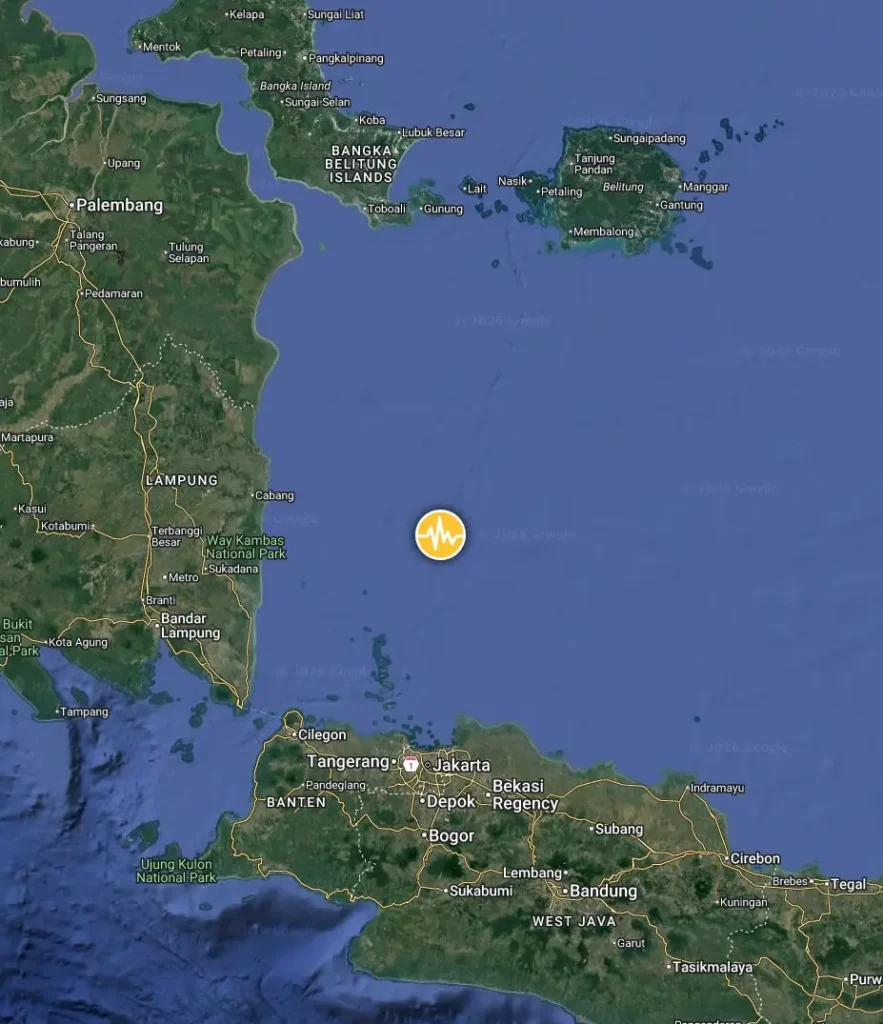
Epicenter of M6.6 earthquake in Java, Indonesia on September 11, 2026. Credit: TW/SAM, Google
The epicenter was located 115 km (70 miles) NNE of Teluknaga (population 128 275), 120 km (75 miles) NNE of Sepatan (population 118 439), 125 km (75 miles) NNE of Tangerang (population 1 911 914), 125 km (80 miles) N of Jakarta (population 8 540 121), and 140 km (90 miles) NE of Serang (population 692 101), Indonesia.
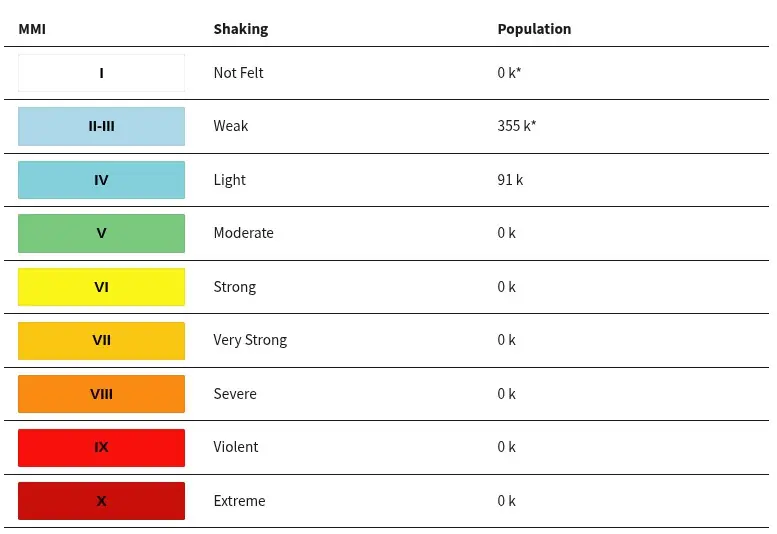
91 000 people are estimated to have felt light shaking and 355 000 weak.
There is no tsunami threat from this earthquake.
The USGS issued a Green alert for shaking-related fatalities and economic losses. There is a low likelihood of casualties and damage. Overall, the population in this region resides in structures that are vulnerable to earthquake shaking, though resistant structures exist.
The predominant vulnerable building types are unreinforced brick with concrete floor and precast concrete frame with wall construction. Recent earthquakes in this area have caused secondary hazards such as landslides that might have contributed to losses.
Estimated population exposure to earthquake shaking
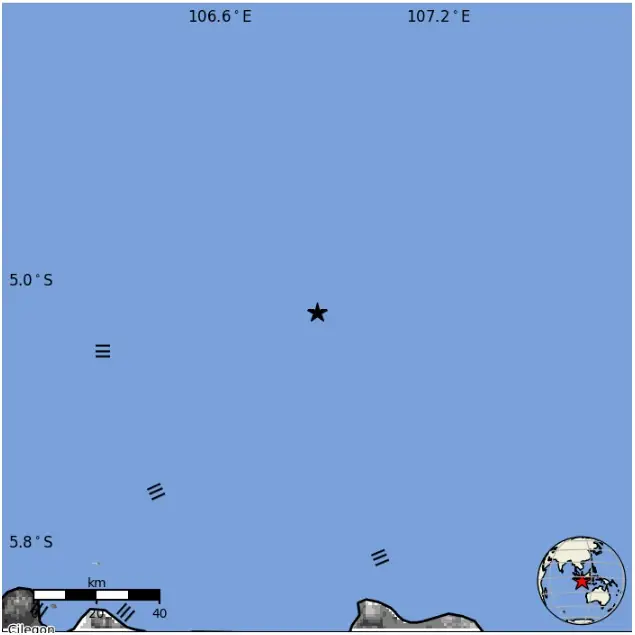
Selected cities exposed

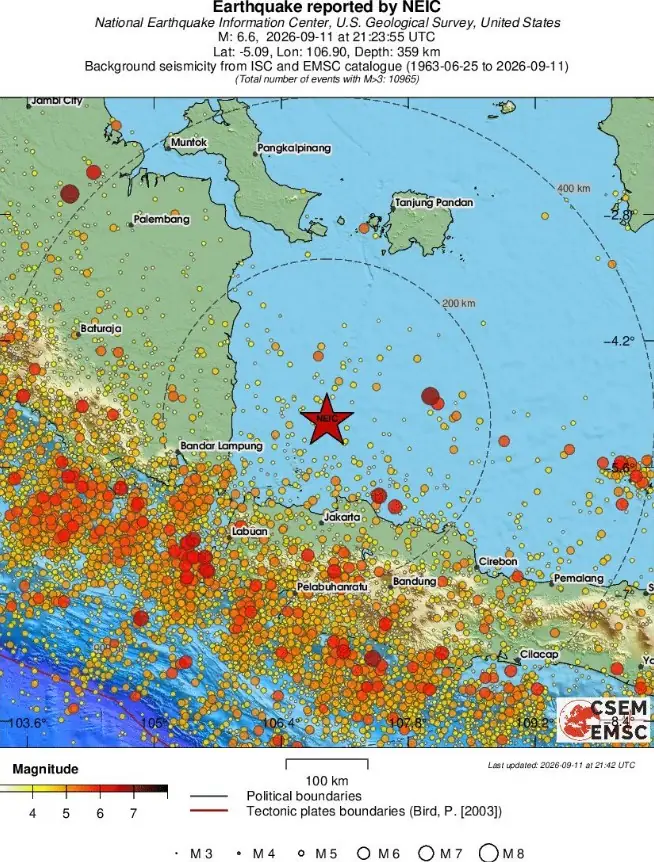
Regional seismicity
References:
1 M6.6 earthquake Java, Indonesia – USGS – September 11, 2026
2 M6.6 earthquake Java, Indonesia – EMSC – September 11, 2026

Teo Blašković founded The Watchers in 2011 and edited it until 2026, covering seismic and volcanic activity, extreme weather, space weather and near-Earth objects. Articles on this page are his archive.
Published in the last 24 hours
- Second nationwide US flight halt since 9/11: how the November 13 FAA ground stop compares with September 2001 and January 2023 Epicenter
- FAA grounds all departing flights across the US after communications outage hits air traffic control centers nationwide
- In September 1859, a solar storm lit up the night sky so brightly that gold miners in the Rocky Mountains woke up after midnight and started cooking breakfast, convinced the aurora glowing over their camp was the sunrise Epicenter
- A patch of warm Pacific water that could become the strongest El Niño in more than 70 years sits thousands of miles from any American town, yet it is already the main reason NOAA expects a wetter winter across the South and a milder one across the North
