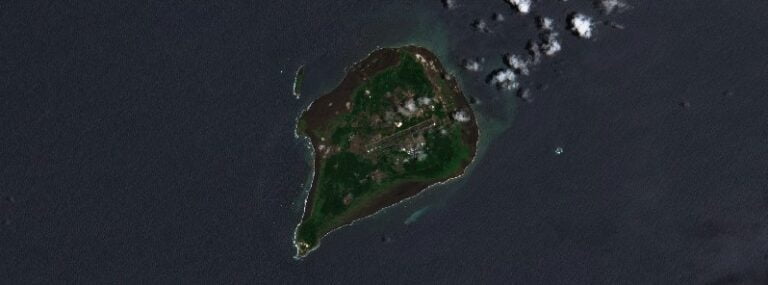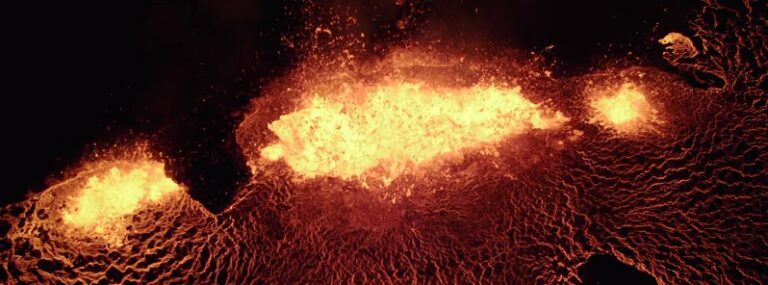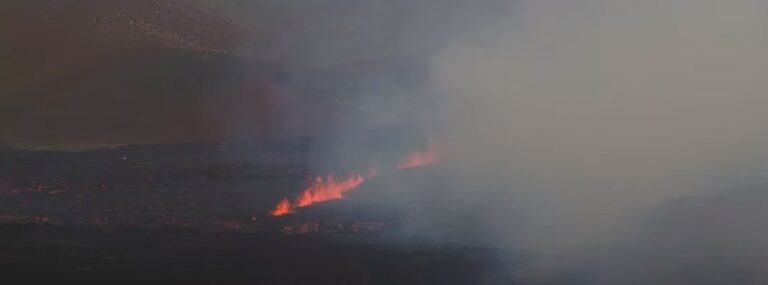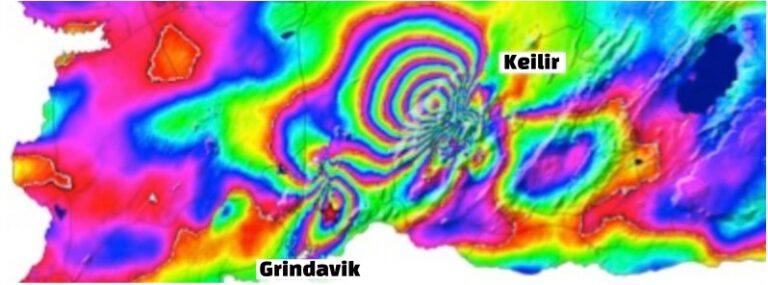
Series of explosions at Stromboli volcano, Italy
A series of explosions were registered at Stromboli volcano’s North crater area, starting at 02:56 UTC on July 25, 2022. The strongest explosion took place at 02:56:30 UTC.

A series of explosions were registered at Stromboli volcano’s North crater area, starting at 02:56 UTC on July 25, 2022. The strongest explosion took place at 02:56:30 UTC.

A strong explosive eruption took place at Sakurajima volcano, Japan at 20:05 LT (11:05 UTC) on July 24, 2022, prompting the Japan Meteorological Agency (JMA) to raise the Volcanic Alert Level from 3 to 5 and urge residents living within 3 km (1.8 miles) from the volcano to evacuate.

Pavlof Volcano continues to erupt from the active vent on its east flank, just below the summit. The Aviation Color Code remains at Orange. Previous eruptions of Pavlof indicate that the level of unrest can change quickly and the progression to more significant eruptive activity can occur with little or no warning.

New activity/unrest was reported for 2 volcanoes from July 13 to 19, 2022. During the same period, ongoing activity was reported for 16 volcanoes.

The Hawaiian Volcano Observatory (HVO) has detected increased seismic activity beneath Kamaʻehuakanaloa (formerly known as Lōʻihi) seamount, south of the Island of Hawaiʻi over the past few days. The activity is likely the result of magma movement beneath Kamaʻehuakanaloa seamount and currently shows no sign of leading to an eruption. The last eruption at this volcano took place in 1996 (VEI 0).

New activity/unrest was reported for 2 volcanoes from July 6 to 12, 2022. During the same period, ongoing activity was reported for 17 volcanoes.

A new strong eruption was detected at Russia’s Karymsky volcano at around 10:50 UTC on July 13, 2022. The Aviation Color Code remains at Orange.

A swarm of very low-magnitude hybrid seismic events was registered under Teide volcano, Tenerife, Canary Islands, Spain on July 12, 2022. The most likely origin of this type of swarm is the movement of fluids such as steam, gas or water, inside the hydrothermal system of the volcano.

The Japan Meteorological Agency (JMA) raised the alert level for Tsurumidake and Garandake, Kyushu, Japan on July 8, 2022, from 1 to 2 (restriction on proximity to the crater). The last eruption at this volcano took place in the year 867 (VEI 3).

New activity/unrest was reported for 2 volcanoes from June 29 to July 5, 2022. During the same period, ongoing activity was reported for 21 volcanoes.