The Watchers team and our contributors bring the latest on extreme weather, earthquakes, volcanic eruptions, space weather, and all things science. We're all about making sense of the natural world and keeping you informed on what’s happening. Got a tip or a question? Hit us up using the form at newstips!

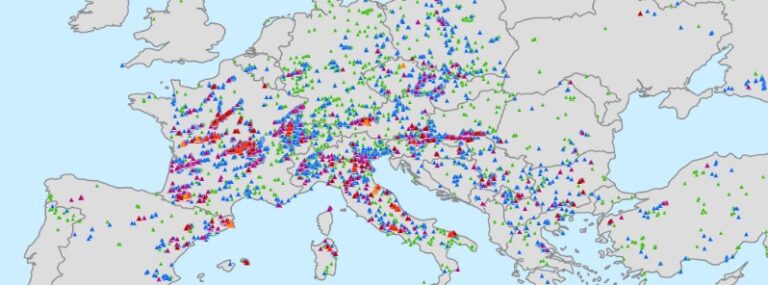
  • Europe experienced record number of hailstorms in 2022 for the second year in row

    2022 saw a record-breaking number of hailstorms in Europe with 8 224 large hail reports. That is 2 791 large hail reports more than in 2021, which was already a record-breaking year. France had the most reports with 2 461 and was also the country with the largest economic impact of 4.8 billion €.

  • Tropical Cyclone “Cheneso” rapidly intensifies after leaving a trail of death and destruction in Madagascar

    Tropical Cyclone “Cheneso” rapidly intensified after spending 5 days over Madagascar, bringing death and destruction. The system is expected to further intensify as it moves near the SW coast of the country over the next few days, bringing more heavy rainfall. Parts of northern Madagascar have already received more than 1 000 mm (40 inches) of rain.

  • Stratospheric temperature rise signals weakened polar vortex and Arctic air outbreaks in the northern hemisphere

    The polar vortex, a large area of low pressure in the upper atmosphere that typically sits over the poles, is set to weaken as a sudden stratospheric warming (SSW) event unfolds in the northern hemisphere. This event has the potential to have a significant impact on winter weather, as it allows cold Arctic air to escape and cause outbreaks in Europe, Asia, Canada, and the United States.

  • Deadly flash flood hits popular scenic area on Yellow River in Henan, China

    At least 2 people died and 7 went missing on January 22, 2023, after a sudden flood swept away families celebrating the Lunar New Year downstream of the Sanmenxia Dam Scenic Area on the Yellow River in Henan, China. The flood reportedly caused the water level in the river to rise by 1.8 meters (6 feet) in just six minutes, leaving little time for those affected to react.