I'm a dedicated researcher, journalist, and editor at The Watchers. With over 20 years of experience in the media industry, I specialize in hard science news, focusing on extreme weather, seismic and volcanic activity, space weather, and astronomy, including near-Earth objects and planetary defense strategies. You can reach me at teo /at/ watchers.news.

  • Storm leaves a trail of destruction, 12 dead in Bangladesh

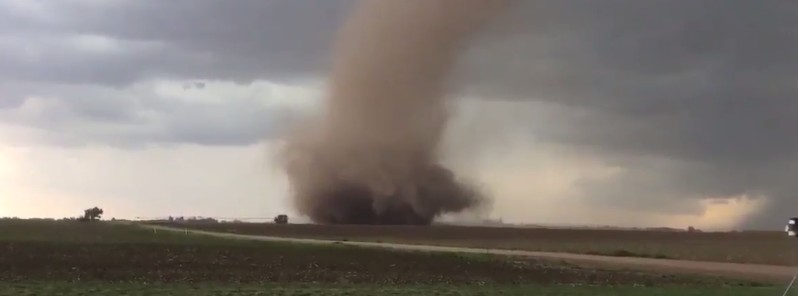
    A powerful storm hit parts of northern Bangladesh on Monday, May 1, 2017, killing at least 12 people and leaving many injured, authorities reported. The storm left a trail of destruction but also came as a blessing for millions after days of heat wave scorched the…

  • Sheveluch erupts ash up to 9.1 km (30 000 feet), Russia

    A powerful eruption of Russia's Sheveluch volcano took place at 23:30 UTC on May 2, 2017. The Aviation Color Code remains Orange. According to the Tokyo VAAC, the volcanic ash was reaching 9.1 km (30 000 feet) above sea level at 03:40 UTC. At 03:20 UTC, it was…

  • X-ray ‘tsunami’ discovered in Perseus galaxy cluster

    Scientists have discovered a vast wave of hot gas in the nearby Perseus galaxy cluster, spanning some 200 000 light-years. This is twice the size of our own Milky Way galaxy. The discovery was made combining data from NASA's Chandra X-ray Observatory with radio…

  • Asteroid 2017 JA flew past Earth at a distance of 0.26 LD

    A newly discovered asteroid 2017 JA flew past Earth at a distance of 0.26 LD (~99 840 km / 62 037 miles) on May 2, 2017, just a day after it was discovered. This is the 22nd known near-Earth asteroid to flyby Earth within 1 lunar distance (according to data…

  • Sakurajima rains ash on Kagoshima city, Japan

    Another powerful eruption took place at Japan's Mount Sakurajima at 18:20 UTC on May 1, 2017 (03:20 JST, May 2). The eruption ejected ash up to 4.9 km (16 000 feet) above sea level toward Kagoshima city where it caused significant ash fall. Sakurajima blew its…

  • Night sky guide for May 2017

    May 2017 brings us Eta Aquarids, an above average meteor shower capable of producing up to 60 meteors per hour at its peak, in the southern hemisphere. The waxing gibbous moon, however, will block out many of the fainter meteors this year. The Moon will be located…