The Watchers team and our contributors bring the latest on extreme weather, earthquakes, volcanic eruptions, space weather, and all things science. We're all about making sense of the natural world and keeping you informed on what’s happening. Got a tip or a question? Hit us up using the form at newstips!

  • Mount Hood earthquake swarm tectonic in nature, US

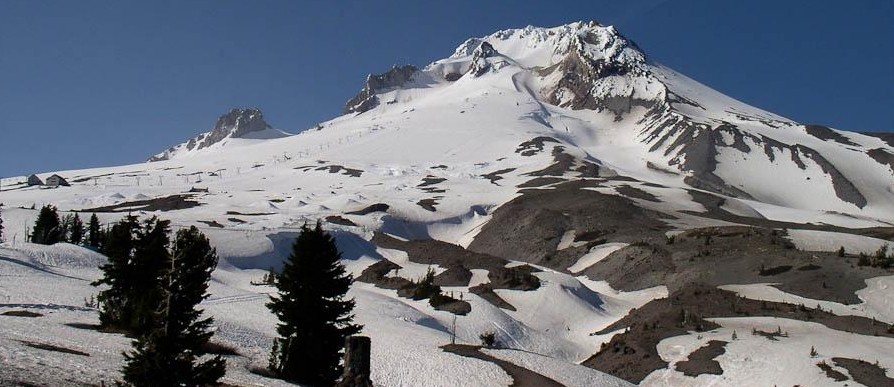
    A swarm of small earthquakes was detected at Mount Hood on May 15 and 16, 2016. The quakes were located 3.2 – 4.8 km (2 – 3 miles) south of the summit of Mount Hood at depths of 3.2 – 4.8 km below sea level. The largest event was a magnitude 1.8. Earthquake rates…

  • Massive landslide buries three villages, over 200 families missing, Sri Lanka

    According to government officials, a large landslide triggered by more than three days of heavy rain buried three villages in Aranayaka (Siripura, Pallebage and Elagipitya), district of Kegalle, Sri Lanka on May 17, 2016. As of late May 17, the death toll is still…

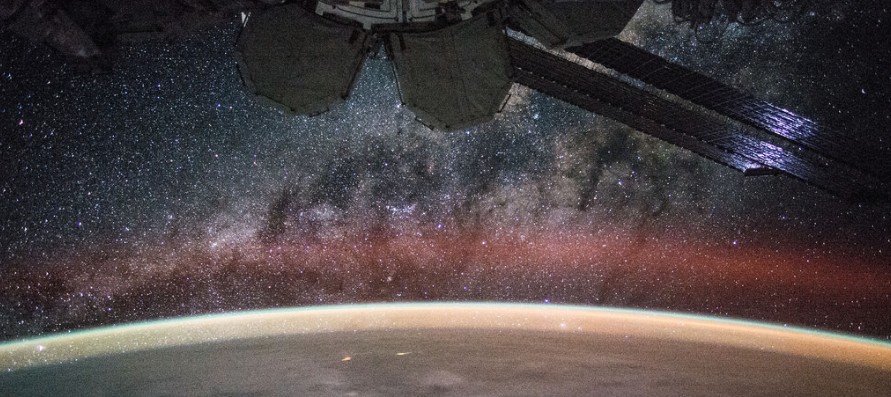
  • ISS makes 100 000 orbits around Earth

    As it passed Earth's equator at 06:10 UTC on May 16, 2016, the International Space Station (ISS) started its 100 000th orbit around Earth. It took 17 years for ISS to reach this important milestone. During the 100 000 orbits since the first component of the…

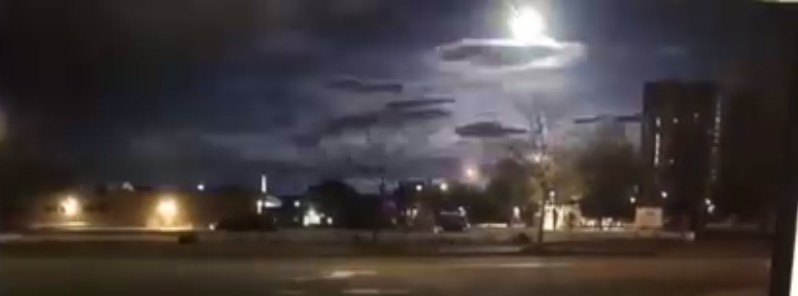
  • Very bright fireball over Northeastern US, ground shaking reported

    A very bright fireball was observed over the Northeastern US at around 04:50 UTC on May 17, 2016. The event lasted between 3 and 8 seconds and was accompanied by fragmentation and sonic boom. The American Meteor Society received 144 reports by 09:30 UTC. The…

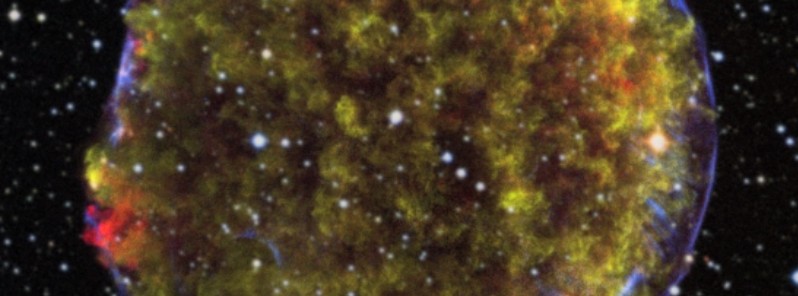
  • X-ray observatory captures expanding debris from a stellar explosion

    Using data from NASA's Chandra X-ray Observatory, the NSF’s Karl G. Jansky Very Large Array (VLA) and many other telescopes astronomers are observing the debris field from supernova explosion first extensively observed and written about by Danish…

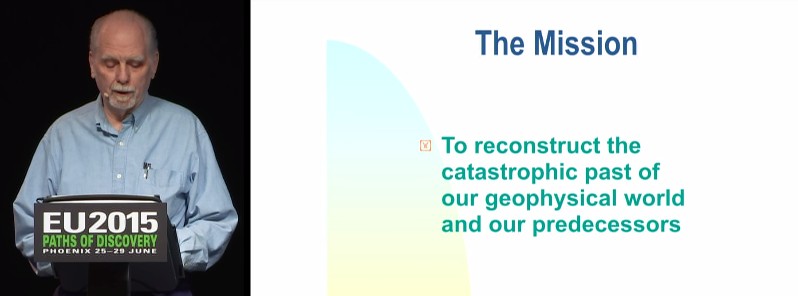
  • Michael Armstrong: The ‘culture shock’ of planetary catastrophe

    In this presentation, Michael Armstrong will review the broad spectrum of human and cultural effects that followed from solar system instability and episodic catastrophe. These effects include earth’s environment and ecology, physical changes in human biology,…

  • Flying through explosive magnetic phenomenon to understand space weather

    Analyzing data obtained by four identical spacecraft that passed directly through a magnetic reconnection site on the boundary between the solar wind and Earth's magnetosphere, researchers have observed how this explosive physical process converts stored…

  • Earth’s mantle moves up and down “like a yo-yo”

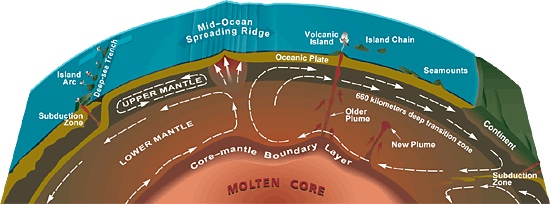
    Researchers have compiled the first global set of observations of the movement of the Earth’s mantle – the 3000-km-thick layer (1 864 miles) of hot silicate rocks between the crust and the core – and found that it is moving much faster than has…

  • Kepler mission announces largest collection of planets ever discovered

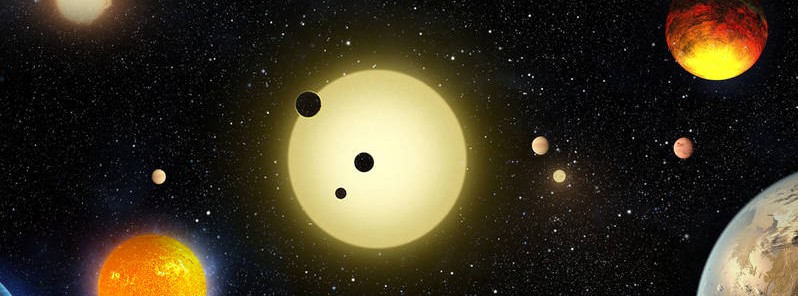
    Kepler mission announced today it has verified 1 284 new planets – the single largest finding of planets to date. "This announcement more than doubles the number of confirmed planets from Kepler and gives us hope that somewhere out there, around a star…

  • The 2016 Mercury transit as seen by SDO

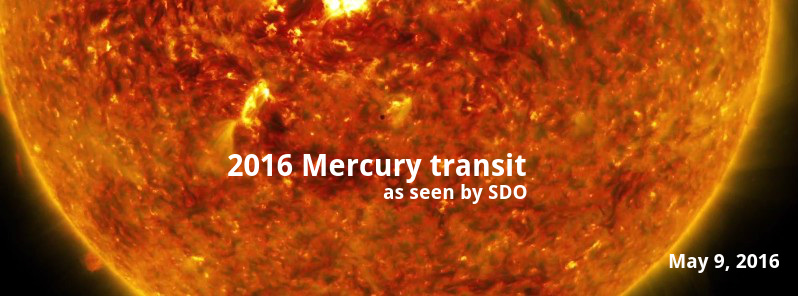
    In a rare astronomical event known as a planetary transit, Mercury passed between the Earth and the Sun on May 9, 2016. The transit occurred between roughly 11:12 and 18:42 UTC and Solar Dynamics Observatory (SDO) captured it in multiple views. Each century hosts…