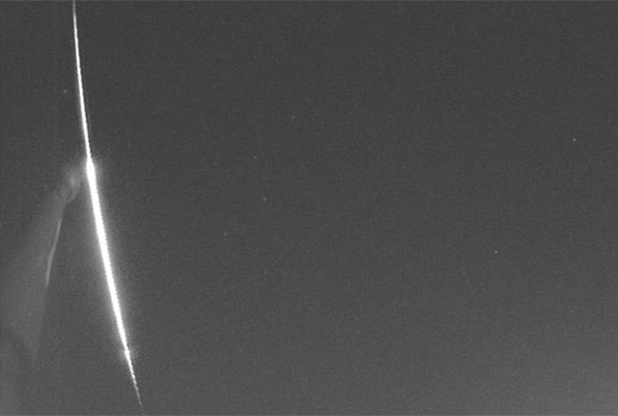
• Bright green fireball observed over Exeter, England

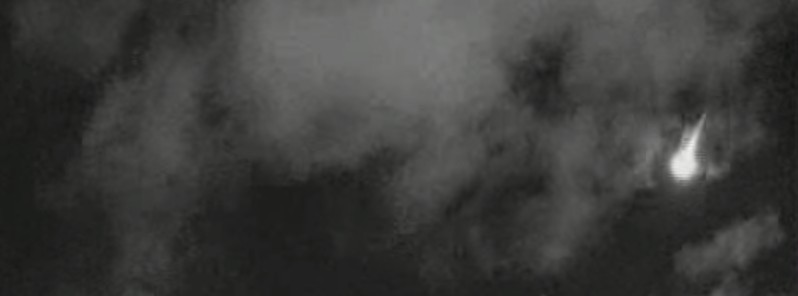
    A bright green fireball lit up the skies over Exeter, England at 21:37 UTC on January 22, 2017. The event lasted about 7 seconds and was recorded by meteor observation camera at Exeter Observatory, part of the UK Meteor Monitoring Network. It is possible the object…

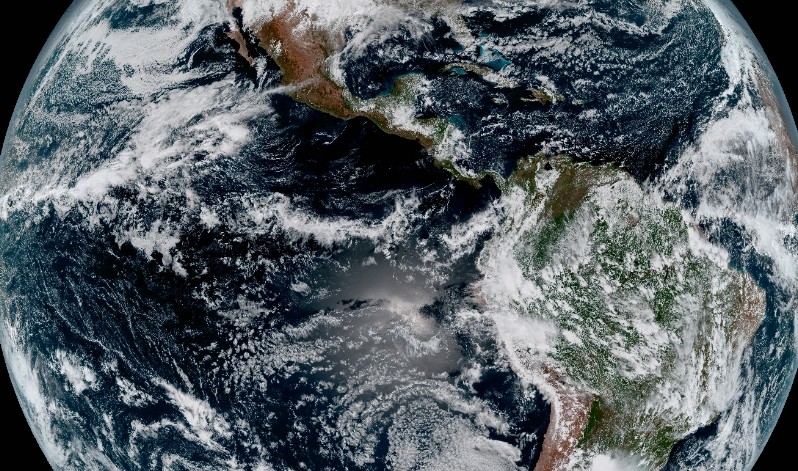
  • New age of weather satellites: GOES-16 sends first images

    GOES-16, previously known as GOES-R, NOAA's newest weather satellite, has finally sent its first images. The release of the first images today is the latest step in a new age of weather satellites. It will be like high-definition from the heavens, NOAA says….

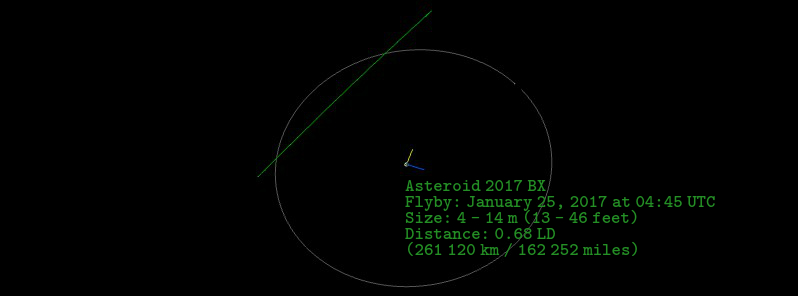
  • Newly discovered asteroid 2017 BX to flyby Earth at 0.68 LD

    A newly discovered Apollo-class asteroid 2017 BX will flyby Earth at 0.68 LD (261 120 km / 162 252 miles) from the surface of our planet on January 25, 2017. Its estimated size is between 4 and 14 m (13 and 46 feet). At the time of its closest approach to Earth -…

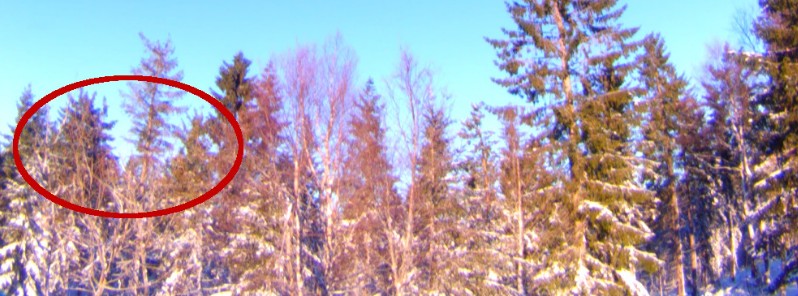
  • Daylight fireball explodes over Norway

    An impressive bright flash appeared above central Norway on January 15, 2017, and was observed from both western and eastern Norway. Eyewitnesses are asked to submit their reports. According to the Norwegian Meteor Network, the event occurred around 13:48 UTC and…

  • Three fireballs recorded over Brazil

    Three fireballs were recorded over Brazil in the past couple of days. Over Campina Grande on January 6, north of Rio de Janeiro on January 7, and over Espirito Santo on January 9, 2017. Fireballs over Brazil on January 6, 7 and 9, 2017. Image credit: Google The…

  • Newly discovered asteroid 2017 AG13 to flyby Earth at 0.53 LD

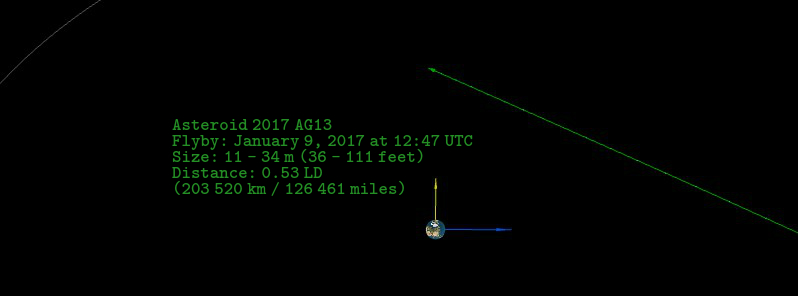
    A newly discovered asteroid named 2017 AG13 will make a very close approach to our planet on January 9, 2017. This asteroid belongs to Aten group of asteroids. 2017 AG13 has an estimated size between 11 and 34 m (36 and 111 feet). It will flyby our planet at 12:47…

  • Quadrantids, known for spectacular fireballs, peak on January 3

    The Quadrantid meteor shower, one of the best annual meteor showers and well known for producing spectacular fireballs, will peak around 14:00 UTC on January 3, 2016. The Moon will be 6 days old at the time of peak activity, presenting minimal interference. This is…

  • Night sky guide for January 2017

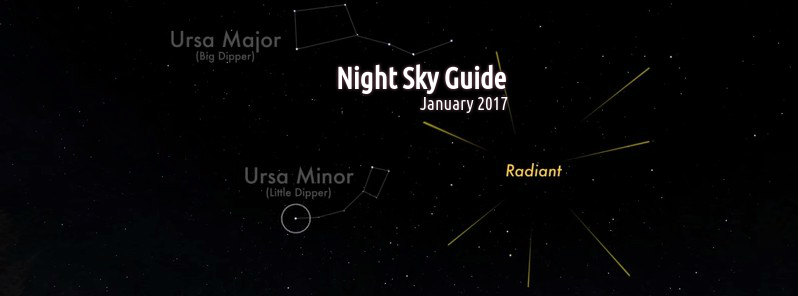
    January 2017 hosts one of the most intense annual meteor showers – the Quadrantids, known for producing spectacular fireballs. The timing favors western parts of North America and islands across the Pacific. The peak of Quadrantids is brief, typically lasting no…

  • Moon’s phases and libration throughout 2017

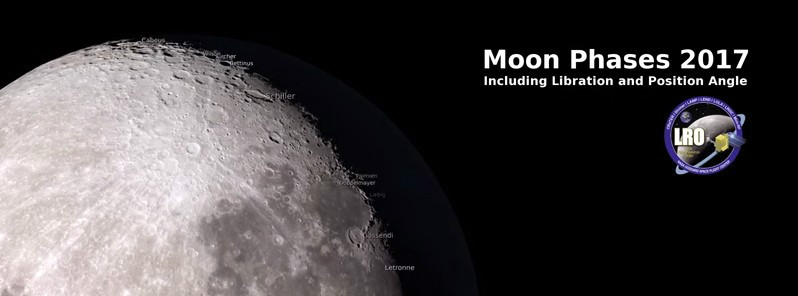
    These 4K visualizations show the Moon's phases and libration at hourly intervals throughout 2017, as viewed from both hemispheres. In addition, they show the Moon's orbit position, sub-Earth and subsolar points, distance from the Earth at true scale, and…

  • Rare sight: Meteor streaks over erupting Turrialba volcano

    Two forces of nature have combined on December 28, 2016, and brought us a rare view of a bright meteor streaking seemingly low over the erupting Turrialba volcano in Costa Rica. The event occurred at 04:22 UTC on December 28 (22:22 local time on December 27),…