Long-duration M3.4 solar flare erupts from AR 3032, generating large CME
A long-duration M3.4 solar flare erupted from Active Region 3032 at 04:07 UTC. The event started at 02:58 and ended at 05:12, releasing a large Coronal Mass Ejection (CME).


Teo Blašković founded The Watchers in 2011 and edited it until 2026, covering seismic and volcanic activity, extreme weather, space weather and near-Earth objects. Articles on this page are his archive.

A long-duration M3.4 solar flare erupted from Active Region 3032 at 04:07 UTC. The event started at 02:58 and ended at 05:12, releasing a large Coronal Mass Ejection (CME).

On June 13, 2022, ESA releases its third and new full data set made by the Gaia observatory located at L2 Lagrangian point – about 1.5 million km or 930 000 miles from Earth. Among other things, this catalog includes chemical compositions, stellar temperatures, colors, masses, ages, and the speed at which stars move towards or away from us.

Submarine eruption continues at Kavachi volcano in the Solomon Islands since it entered the current eruptive phase in October 2021.

A massive spill of an unknown substance has been detected in the Baltic Sea, off the coast of Sweden.

A team of German and Kurdish archaeologists has uncovered a 3 400-year-old Mittani Empire-era city once located on the Tigris River. The settlement emerged from the waters of the Mosul reservoir early this year as water levels fell rapidly due to extreme drought in Iraq.

A new phreatic eruption was detected by the Bulusan Volcano Network at 20:37 UTC on June 11, 2022 (03:37 LT on June 12). The event lasted 18 minutes based on the seismic record but the eruption plume was not visible in camera monitors. Bulusan’s last eruption took place on June 5, forcing PHIVOLCS to raise the Alert Level to 1.

A dangerous rockslide occurred on the road in Vietnam’s Thai Nguyen Province on May 26, 2022. The event ‘illustrates the destructive power of rockfalls in a highly graphic manner,’ said landslides expert Dr. Dave Petley.

A newly-discovered asteroid designated 2022 LU2 flew past Earth at a distance of 0.43 LD / 0.00111 AU (166 537 km / 103 481 miles) at 00:02 UTC on June 8, 2022. This is the 61st known asteroid to fly past Earth within 1 lunar distance since the start of the year.

Arctic’s seasonal sea ice loss began more slowly in May 2022 than in the recent years as air temperatures were closer to the 1981 to 2010 average. The month ended with the highest sea ice extent since 2013 – the 14th lowest in the satellite record.
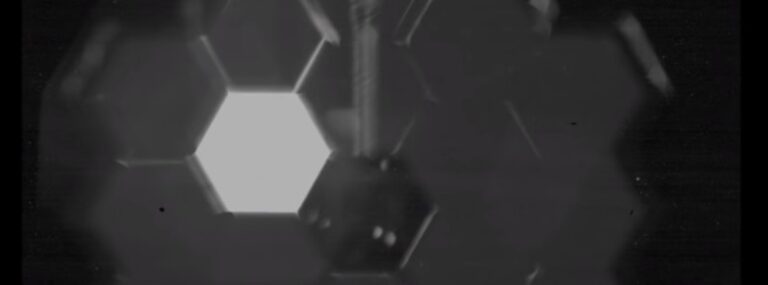
Between May 23 and 25, 2022, NASA’s James Webb Space Telescope sustained a micrometeoroid impact to one of its primary mirror segments. While such strikes are an unavoidable aspect of operating any spacecraft, this most recent impact was larger than was modeled, and beyond what could have been tested on the ground.
