Teo Blašković founded The Watchers in 2011 and edited it until 2026, covering seismic and volcanic activity, extreme weather, space weather and near-Earth objects. Articles on this page are his archive.

  • Significant M5.8 earthquake hits northern Iran

    A strong and shallow earthquake registered by the USGS as M5.8 hit Turkey-Iran border region at 10:08 UTC on January 18, 2023. The agency is reporting a depth of 10 km (6.2 miles). EMSC is reporting M5.6 at a depth of 2 km (1.2 miles).
  • Increased number of shallow earthquakes at Ijen volcano, Indonesia

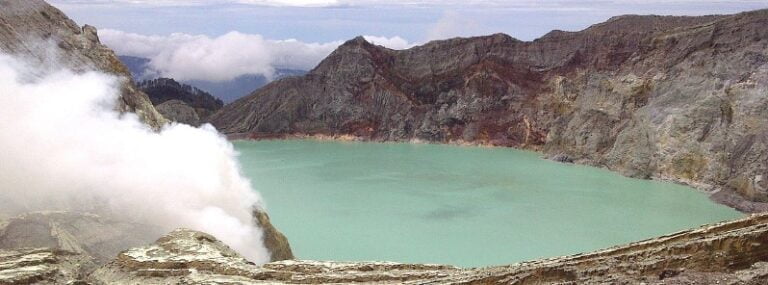
    The Volcanology and Geological Disaster Mitigation Center (PVMBG) reported that beginning in July 2022, the seismic network at Ijen volcano in East Java, Indonesia began detecting increasing numbers of shallow volcanic earthquakes and earthquake signals characteristic of emissions, indicating increasing pressure at shallow depths within the hydrothermal system.

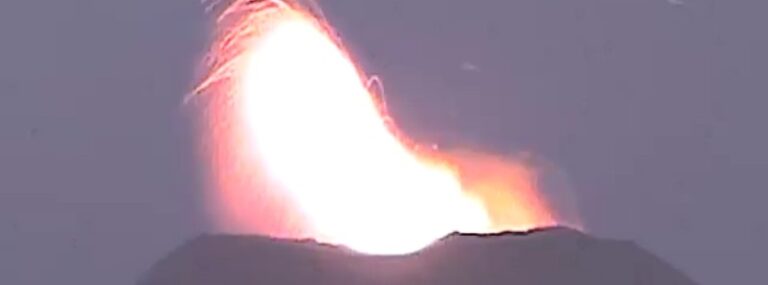
  • Intense lava fountaining at Villarrica volcano, Chile

    Intense strombolian activity continues at Villarrica volcano, Chile, with lava fountains reaching up to 150 m (490 feet) in height. The Alert Level remains at Yellow (the second lowest level on a four-color scale).

  • Very strong and shallow M7.0 earthquake hits northern Molucca Sea, Indonesia

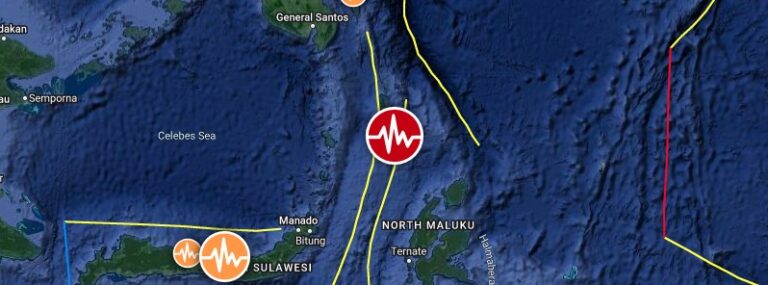
    A very strong and shallow earthquake registered by the USGS hit the northern Molucca Sea, Indonesia at 06:06 UTC on January 18, 2023 (15:06 LT). The agency is reporting a depth of 48 km (29.8 miles). BMKG is reporting M7.1 at a depth of 64 km (39.7 miles); EMSC reporting M7.1 at a depth of 60 km (37.3 miles).

  • M6.0 earthquake hits Sulawesi, Indonesia

    A strong earthquake registered by the USGS as M6.0 hit Sulawesi, Indonesia at 00:34 UTC on January 18, 2023 (08:34 LT). The agency is reporting a depth of 152.5 km (64.6 miles). EMSC is reporting M6.0 at a depth of 159 km (98.8 miles).

  • Storm Gerard hits France with hurricane-force winds

    A powerful low pressure system, named Storm Gerard by Météo France, brought heavy rainfall, strong winds, and thunderstorms to northern and western France on Sunday, January 15, and Monday, January 16, 2023, resulting in significant weather-related incidents and causing casualties and damage. This is the 22nd named storm of the 2022/23 European windstorm season, including two ex-hurricanes (Danielle and Martin).

  • Iowa hit by first January tornadoes in 56 years, U.S.

    On January 16, 2023, Iowa experienced a rare meteorological event as two tornadoes touched down in the eastern part of the state, marking the first January tornadoes in Iowa in 56 years. According to the National Weather Service (NWS), the last time Iowa saw January tornadoes was in 1967 — with a total of 13 tornadoes during the month. While tornadoes are a relatively common occurrence in Iowa, with peak season typically taking place in May, January tornadoes are a rare phenomenon.

  • Rising temperature at Ruapehu’s Crater Lake, New Zealand

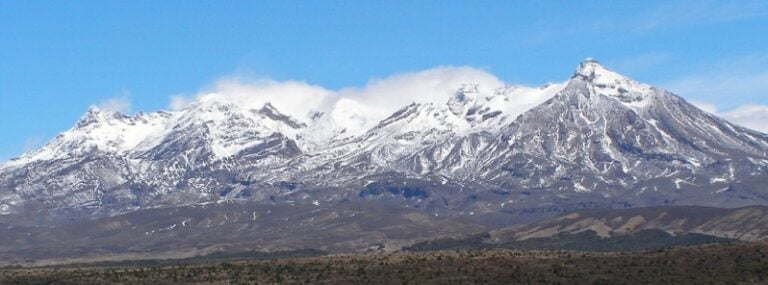
    Recent activity at New Zealand’s Ruapehu volcano has shown an increase in the temperature of the summit Crater Lake, known as Te Wai ā-moe, rising to more than 30 °C (86 °F) and consistent with heat flow into the lake of about 150-200 MW. Despite this, the level of volcanic unrest activity remains low, with monitoring indicators remaining within the normal range for this type of activity. The Volcanic Alert Level remains at Level 1 and the Aviation Color Code remains Green, indicating a low risk of eruption.

  • Winter storm to bring heavy snow to High Plains and Great Lakes, impactful freezing rain possible

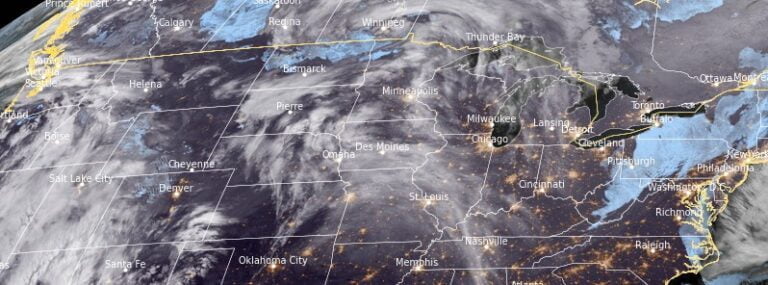
    A winter storm is forecasted to form on Tuesday evening, January 17, 2023, in the eastern regions of Colorado before traversing northeastward through Thursday, January 19. This system is anticipated to bring copious amounts of snowfall to the High Plains region and western Great Lakes area, with the possibility of substantial freezing rain. Expect significant disruptions to travel in affected areas.