I'm a dedicated researcher, journalist, and editor at The Watchers. With over 20 years of experience in the media industry, I specialize in hard science news, focusing on extreme weather, seismic and volcanic activity, space weather, and astronomy, including near-Earth objects and planetary defense strategies. You can reach me at teo /at/ watchers.news.

  • AI revolutionizes space debris detection, surpassing conventional methods

    As we extend our reach into the cosmos, the clutter of space debris in Low Earth Orbit (LEO) becomes a pressing concern, threatening the safety and sustainability of space operations. To help with this growing problem, a recently published study in the journal IET Radar, Sonar & Navigation, introduced a promising solution leveraging the power of artificial intelligence (AI) to enhance the detection of these small but hazardous objects.
  • Filament eruption produces large CME, slight graze possible

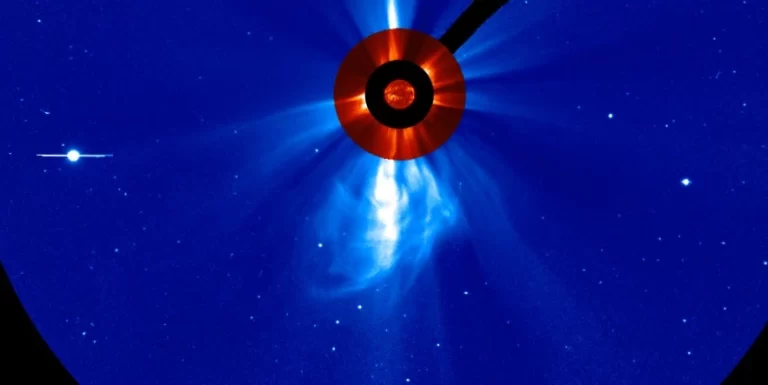
    A solar filament eruption centered near S35E50 took place around 20:00 UTC on March 5, 2024, producing a large coronal mass ejection (CME) which is expected to slightly graze Earth late March 8. G1 – Minor geomagnetic storms are possible on March 9 due to the combined effects of a negative polarity CH HSS and this CME.

  • Study confirms no risk of asteroid Apophis being redirected toward Earth by other asteroids

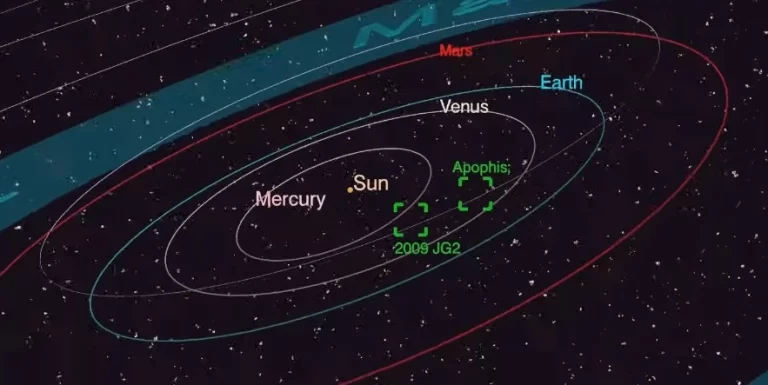
    A comprehensive study by astronomers from Western University calculated the paths of all known asteroids and found there is no risk of the notorious asteroid Apophis colliding with another space object and altering its course toward Earth, further dispelling fears of a potentially catastrophic impact in April 2029. Apophis is named for the demon serpent, who personified evil and chaos in ancient Egyptian mythology.