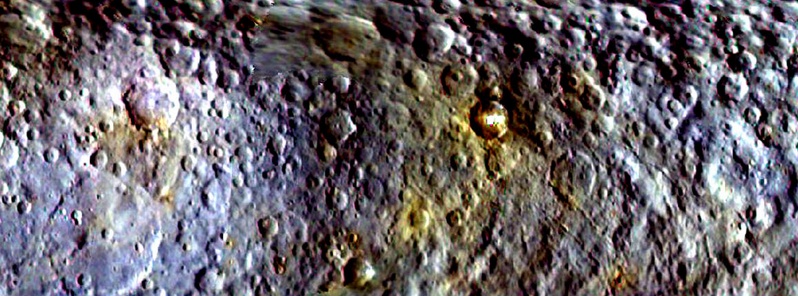
• Dawn’s new Ceres color map reveals surface diversity

    A new color map of dwarf planet Ceres, which NASA's Dawn spacecraft has been orbiting since March 2015, reveals the diversity of the surface of this planetary body. Differences in morphology and color across the surface suggest Ceres was once an active body, Dawn
  • Fragment of continental crust found under south east Iceland

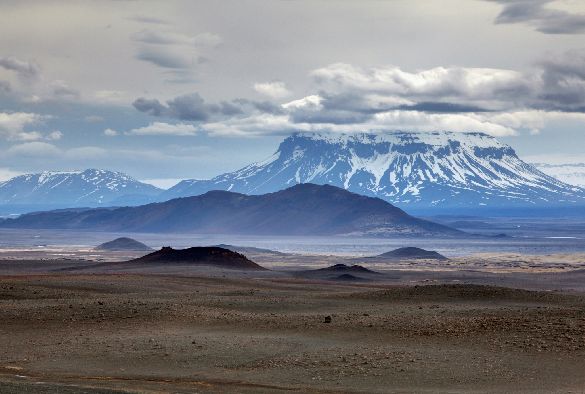
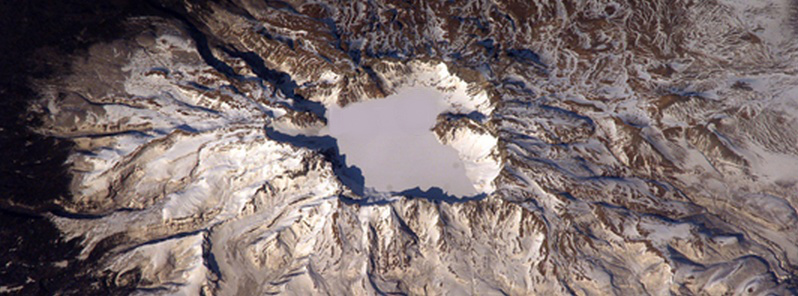
    An international team, including researchers at the University of Liverpool, have shown that south east Iceland is underlain by continental crust.The team found that the accepted theory, that Iceland consists only of very thick oceanic crust, is incorrect. Maps of crust

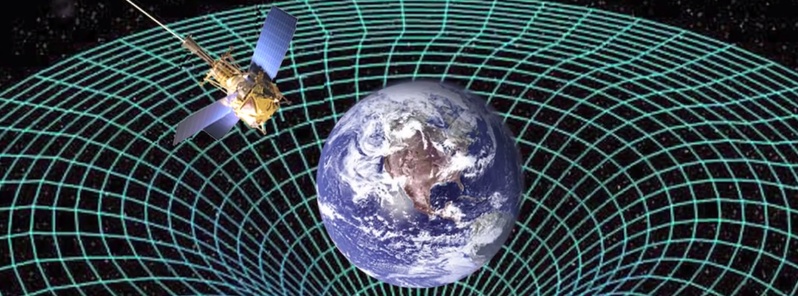
  • Does gravity alone rule the cosmos?

    For nearly three years we have reported on countless discoveries that challenge the foundations of modern cosmology and astrophysics. Today we routinely hear of celestial objects ranging in scale from stars, galaxies and quasar groups that should not exist if the standa

  • Daylight fireball explodes over Kosice, Slovakia

    A bright meteor was observed and recorded over eastern Slovakia on April 6, 2015. The event happened around 16:30 UTC (18:30 local time).One video of the meteor was taken from a car in the Hungarian town of Rakospalota, and another in a second car in the Slovak city of

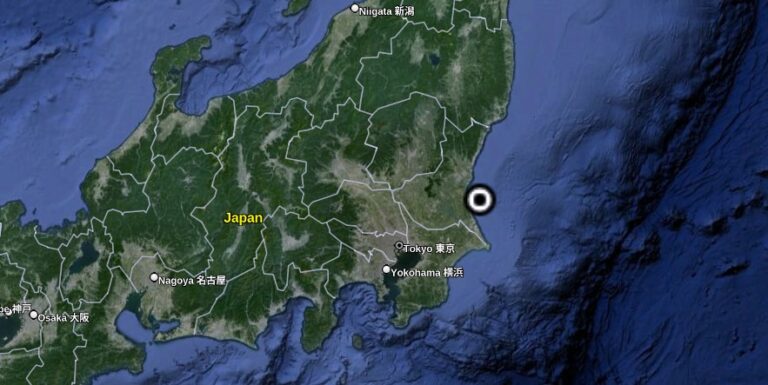
  • Around 150 dolphins stranded northeast of Tokyo, Japan

    Around 150 dolphins were found stranded on the Hokota beach in Ibaraki prefecture, about 100 km northeast of Tokyo, Japan on April 10, 2015. Some dolphins, mostly melon-headed whales (also known as electra dolphins) or blackfish were found alive, but were extremely weak

  • Geomagnetic storm reaching G2 Moderate levels in progress

    The solar wind environment at the ACE spacecraft displayed two weak transient signatures near 01:00 and 09:00 UTC on April 9, 2015, suggesting the arrival of the April 6 Coronal Mass Ejection (CME) from Region 2320 and a weak coronal hole high speed stream (CH HSS).Wind

  • What did the ancient people think of the axis mundi (world axis)?

    In the footsteps of Mircea Eliade, mythologists and anthropologists tend to think of the axis mundi or ‘world axis’ as a straight object running through the cosmos vertically. While this is, of course, correct for the astronomical axis of the earth, the &lsq